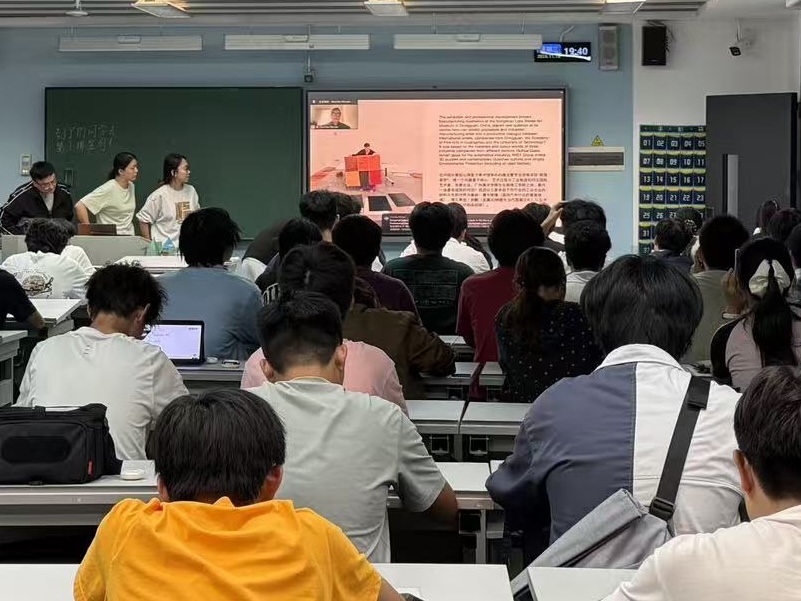
Photo: Dongguan University of Technology
The Line as World Operation
Veronika Wenger
Online lecture
at the Dongguan University of Technology
November 20
2026
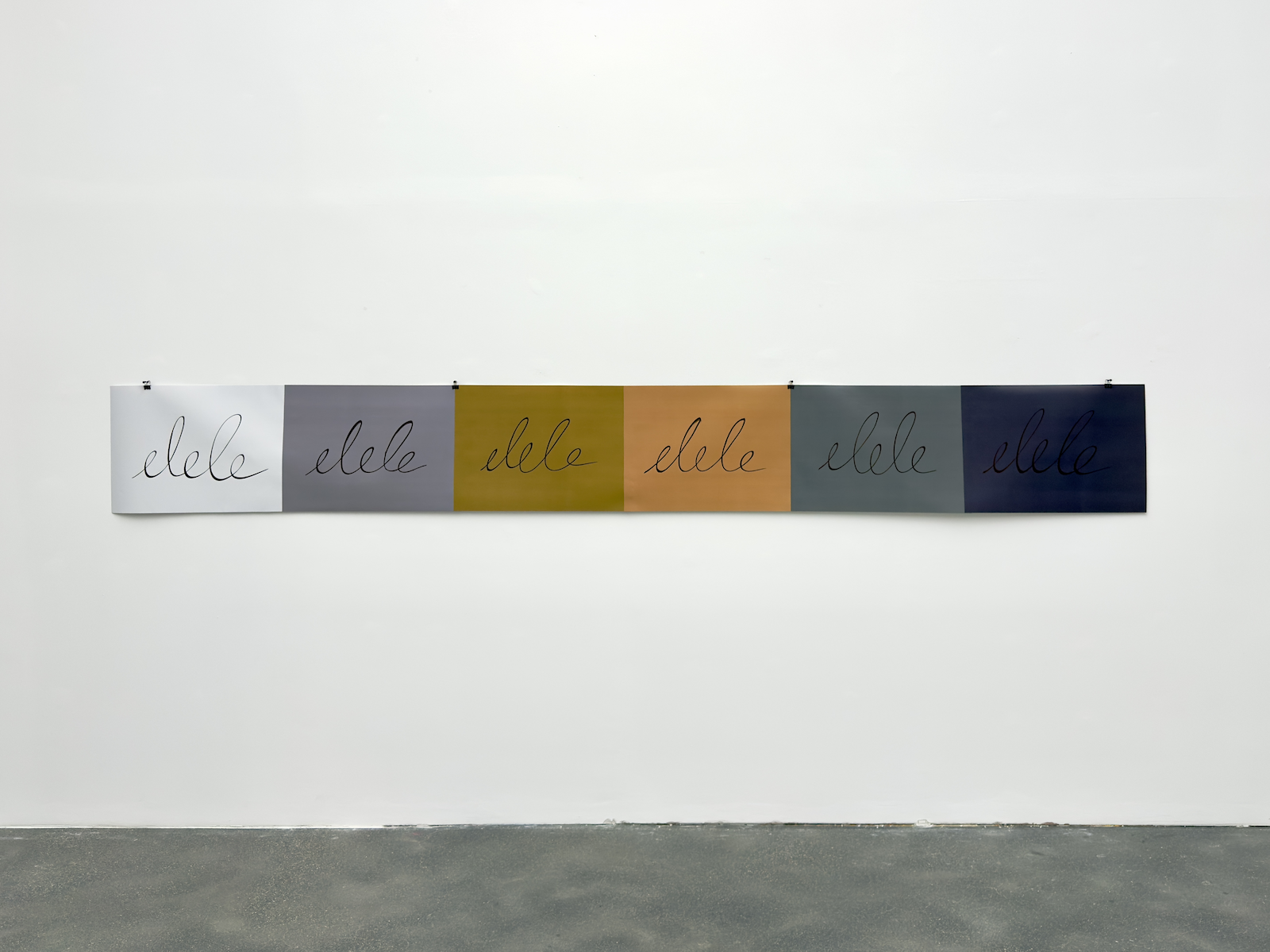
Veronika Wenger 2026
50 x 405 cm, marker on paper
Songshan Lake Boxes Art Museum, Dongguan
Photo: Boxes Art Museum
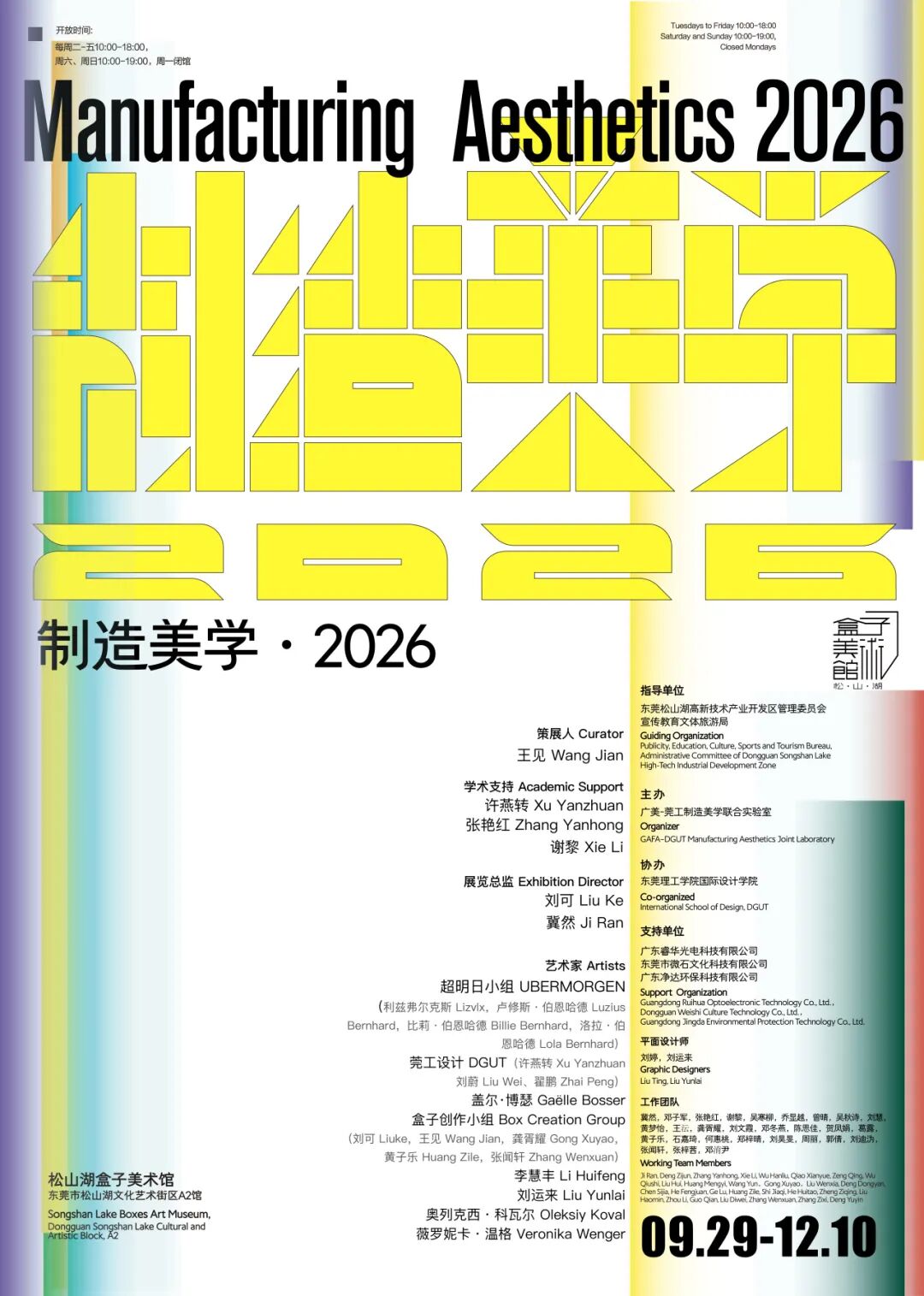
The exhibition and professional development project Manufacturing Aesthetics at the Songshan Lake Boxes Art Museum in Dongguan, China, placed one question at its centre: how can artistic processes and industrial manufacturing enter into a productive dialogue between international artists, companies from Dongguan, the Academy of Fine Arts in Guangzhou and the University of Technology? It was based on the materials and colour worlds of three industrial companies from different sectors: Ruihua Glass (smart glass for the automotive industry), WIST Group (metal 3D puzzles and contemporary Guochao culture) and Jingda Environmental Protection (recycling of used textiles).
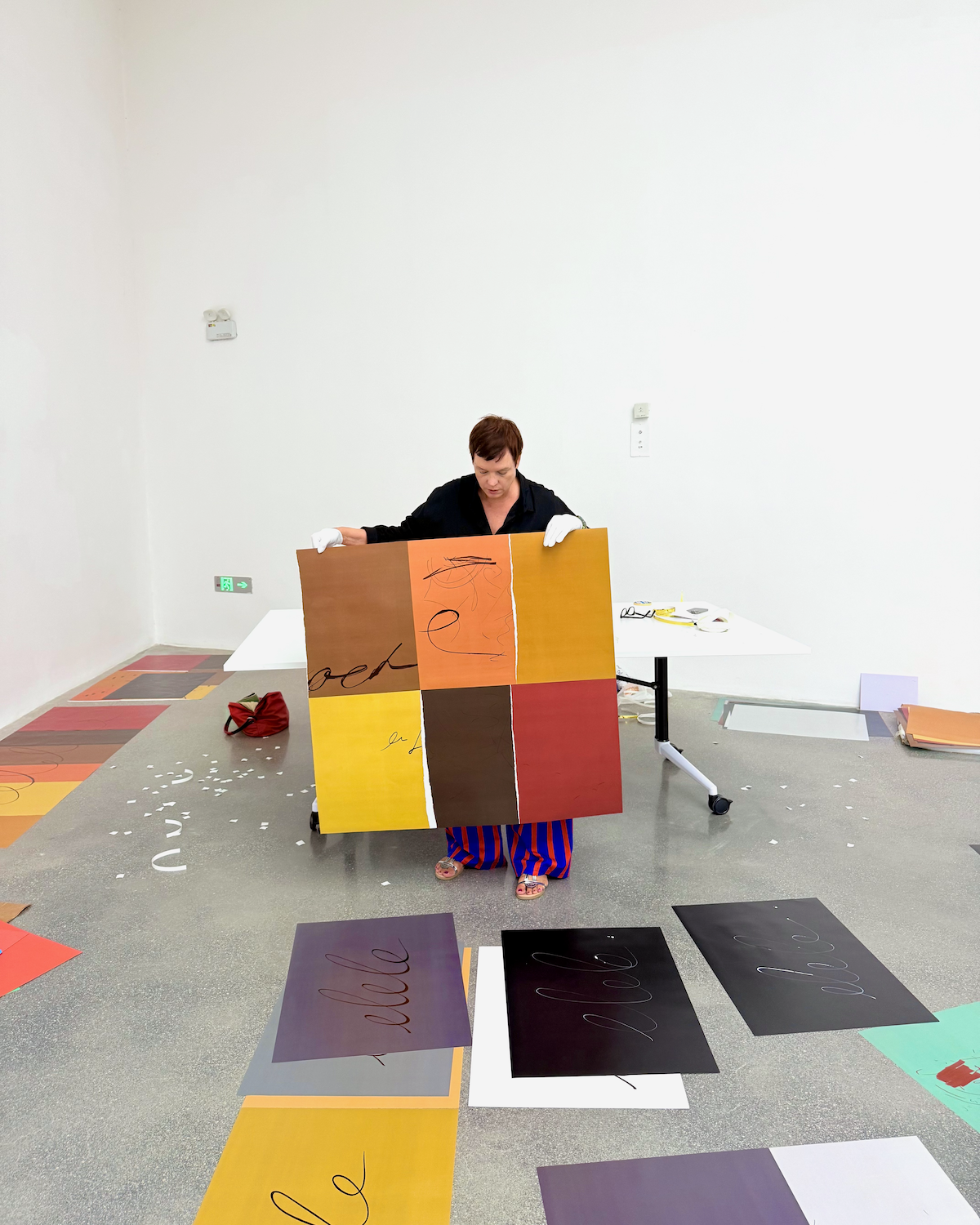
Veronika Wenger
Songshan Lake Boxes Art Museum, Dongguan 2026
Photo: Boxes Art Museum
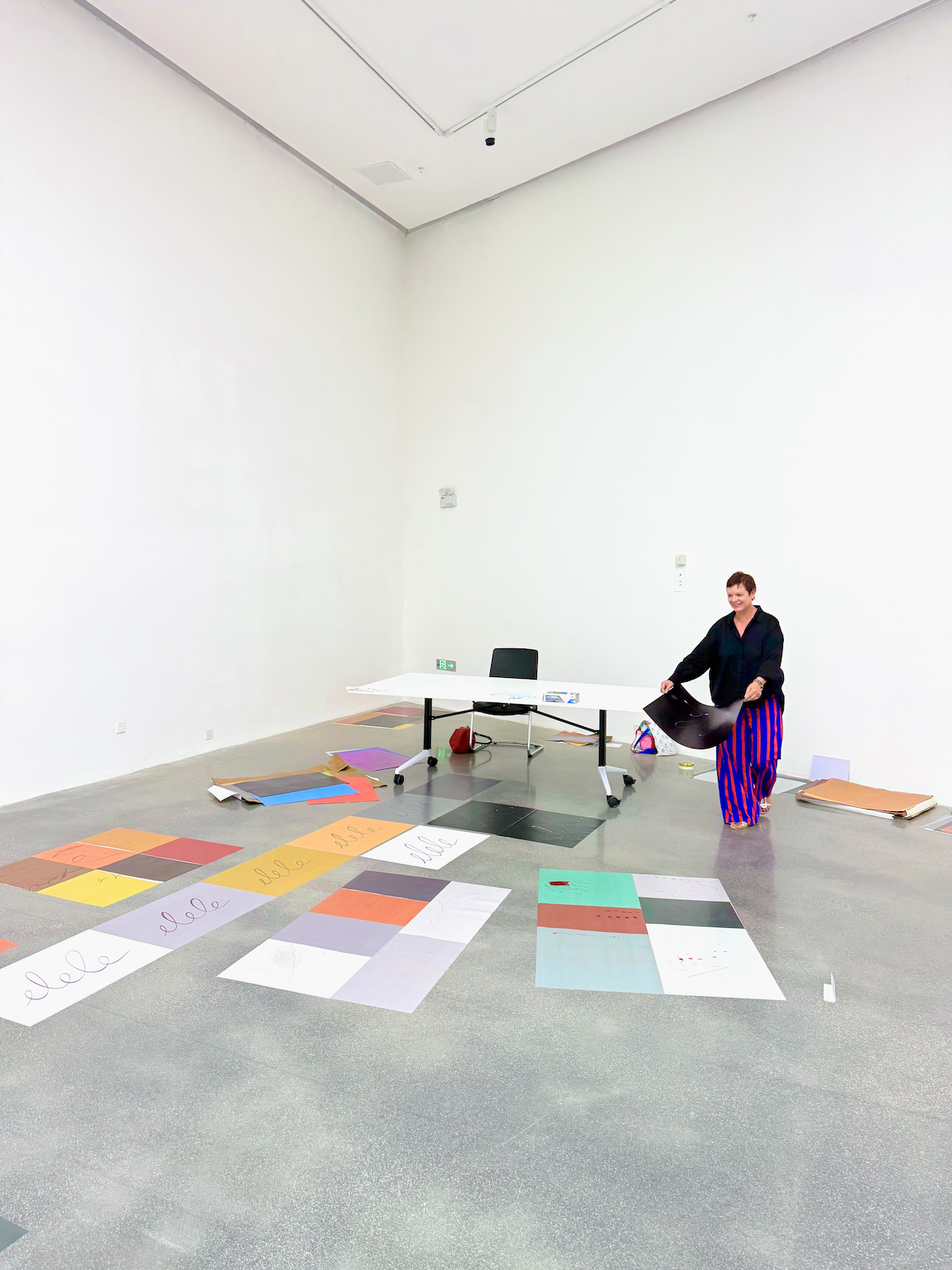
For the project Manufacturing Aesthetics at the Songshan Lake Boxes Art Museum, I developed a series of analog drawings on paper and colored foil on site. The supports are paper and foil in gold, silver, and copper tones, whose color values I derived from the visual identities of the three participating companies 睿华玻璃 (Ruihua Glass), 微石集团 / 拼酷 (Wist Group / Piececool), 净达环保 (Jingda Environmental Protection). On these surfaces, I explore drawing in the sense of Disegno and communication: the line as a world-operation. The drawings emerge in process during my stay, directly in the exhibition space, where they are also presented.
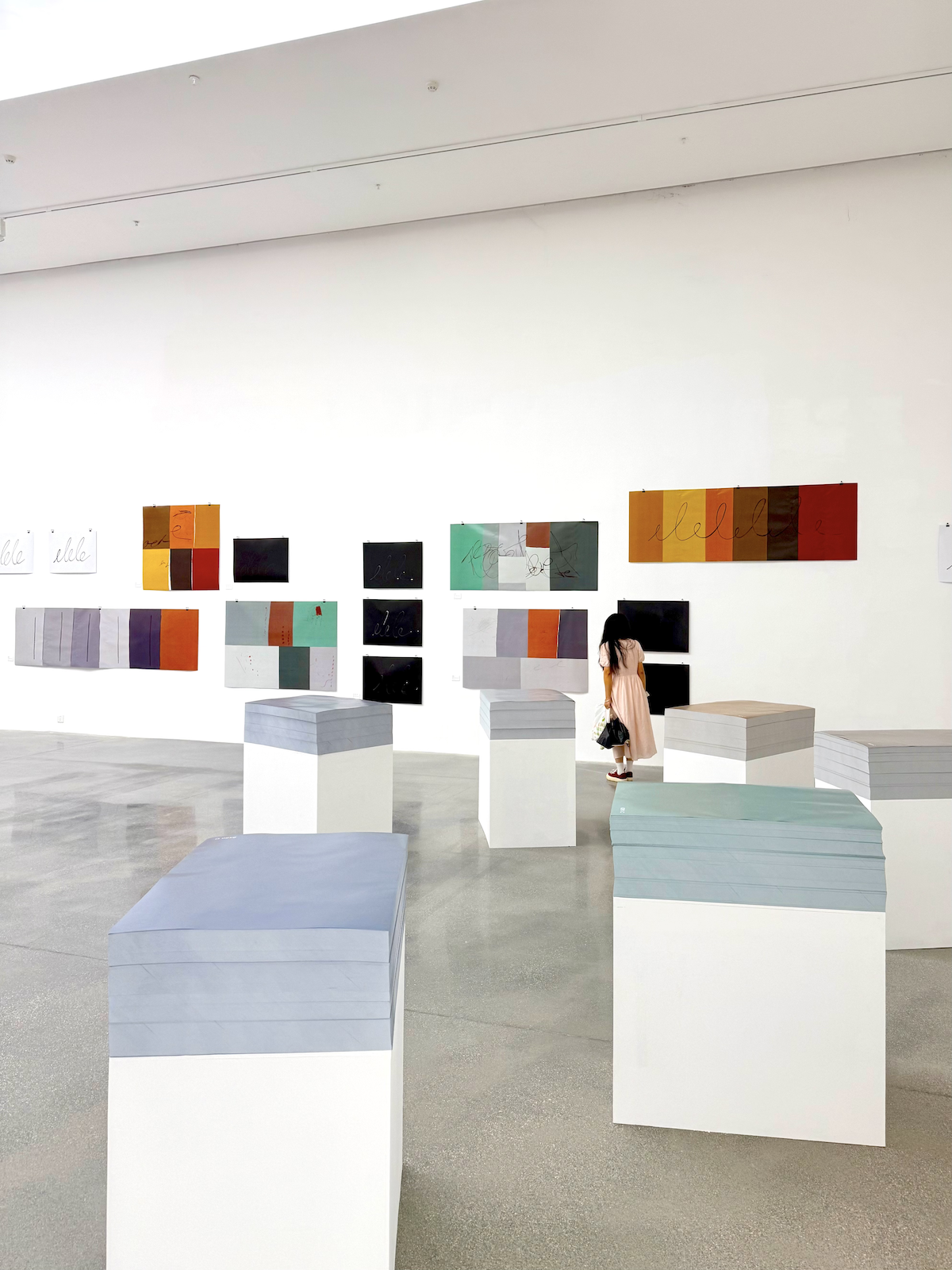
Veronika Wenger
Songshan Lake Boxes Art Museum, Dongguan 2026
Photo: Boxes Art Museum
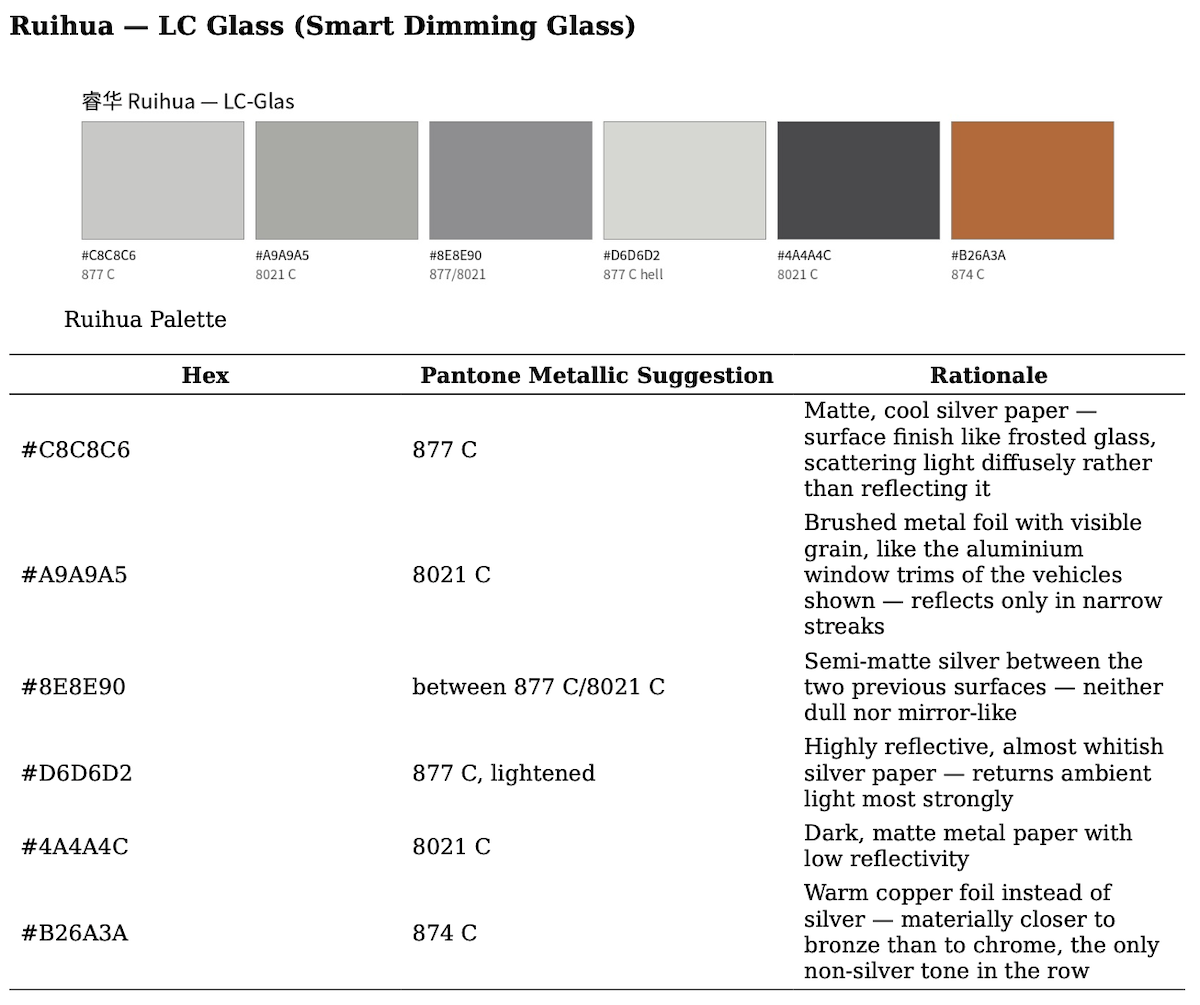
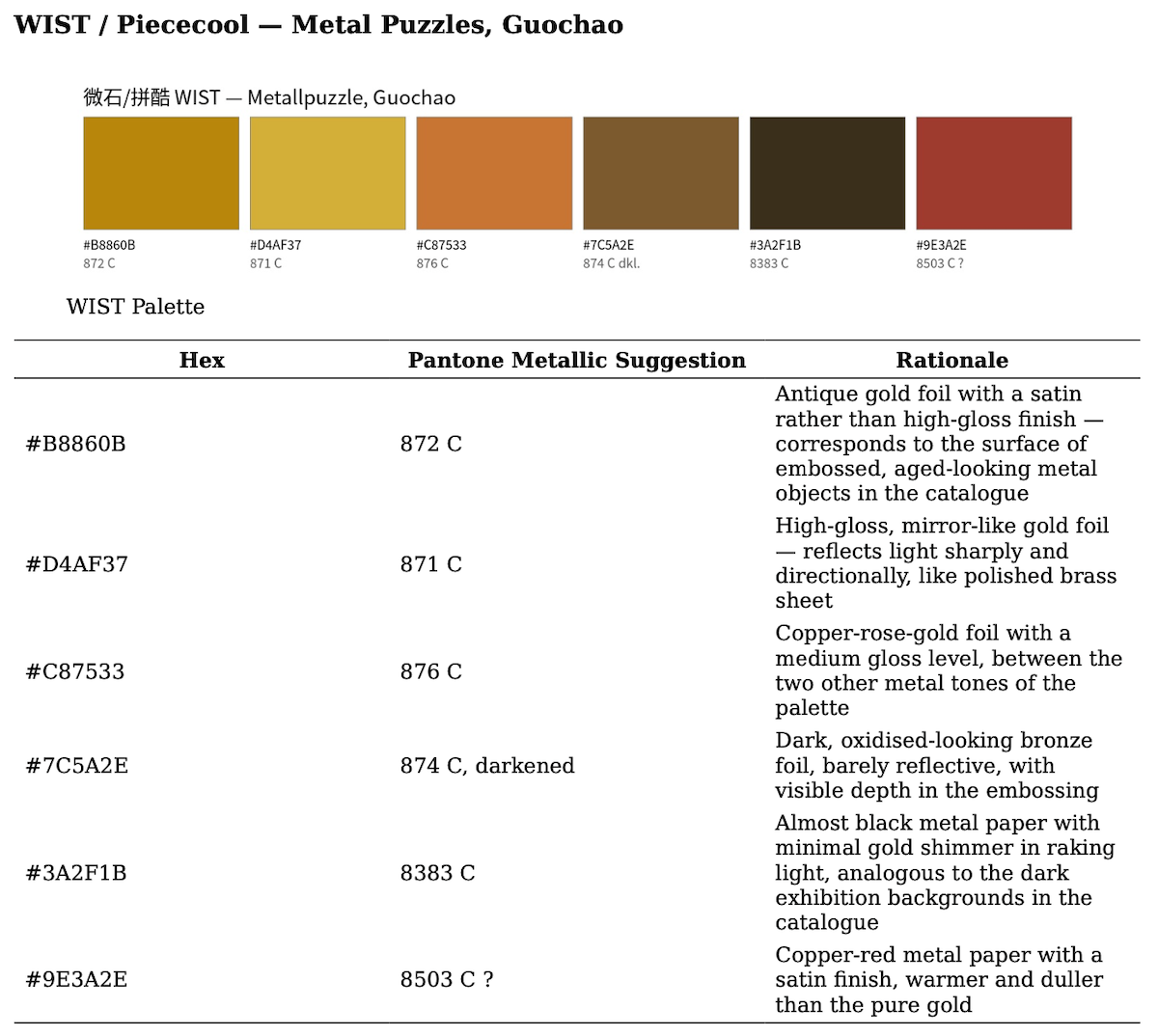
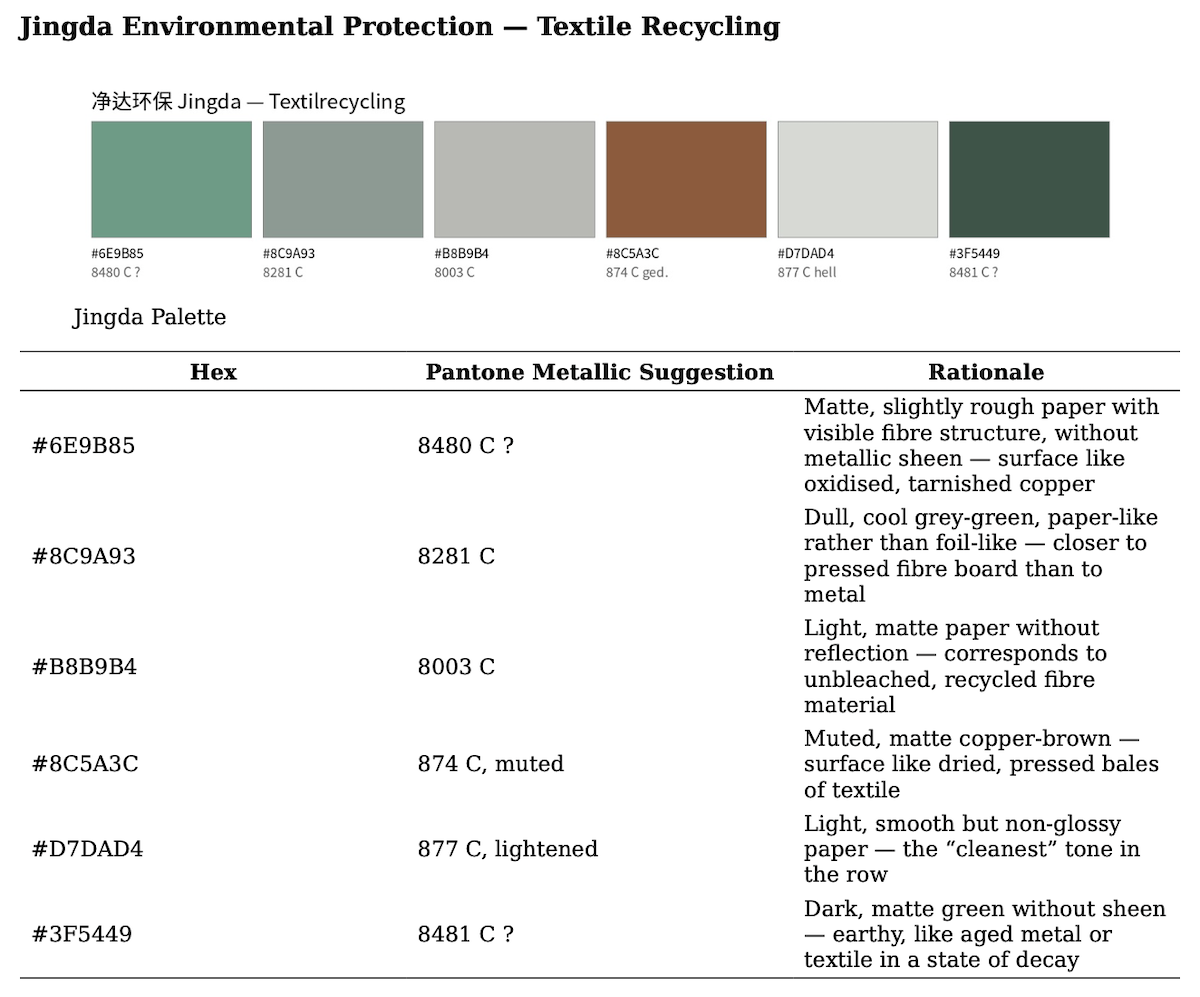
The artists were invited to develop six representative colours for each of these companies, in close engagement with their materials; these colours served as the starting point for the artistic works.
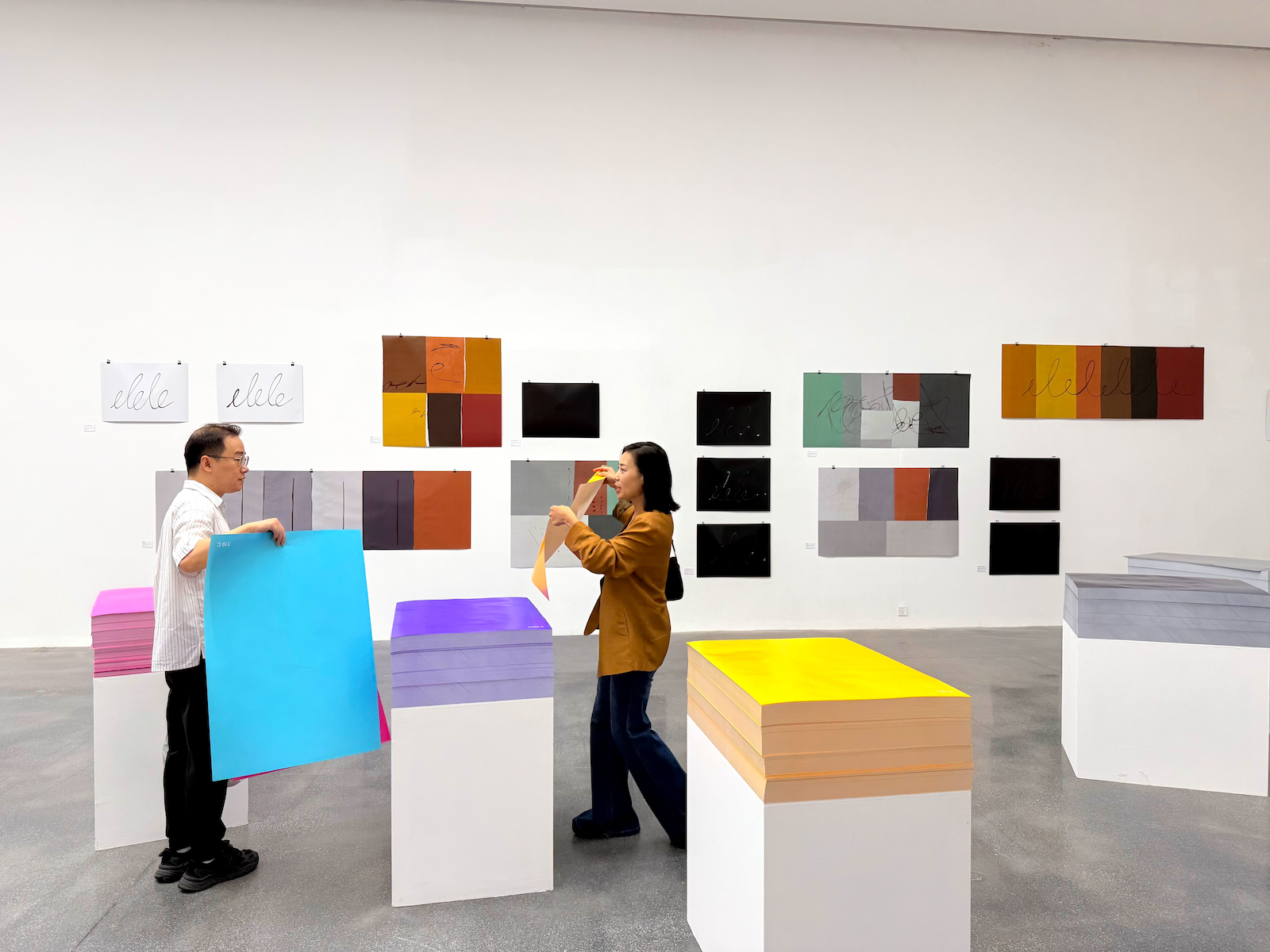
As an invited artist, I worked on site at the Songshan Lake Boxes Art Museum for five days. Using AI, I developed a separate colour system for each of the three companies. This selection of colours was then translated into direct, haptic experience. The museum provided me with gold, silver and copper paper as well as coloured foils matched to my colour selection. From these, collaged drawings emerged that formed a bridge between my artistic work and the use of the colour materials.
Veronika Wenger
Songshan Lake
Boxes Art Museum
Dongguan
The use of AI, the digitisation of colour, the drawing process, and the artistic and scholarly engagement with the media of drawing and painting enabled a deep dialogue with the curators and with the international invited artists.
This collaboration took up the challenge of ever-accelerating processes of social transformation. Through the interdisciplinary cooperation of Dongguan University of Technology, the Guangzhou Academy of Fine Arts and the industrial companies, the work on site gave me valuable experience for my own practice – above all in how design, colour theory and free artistic work can be meaningfully brought together with science and AI.
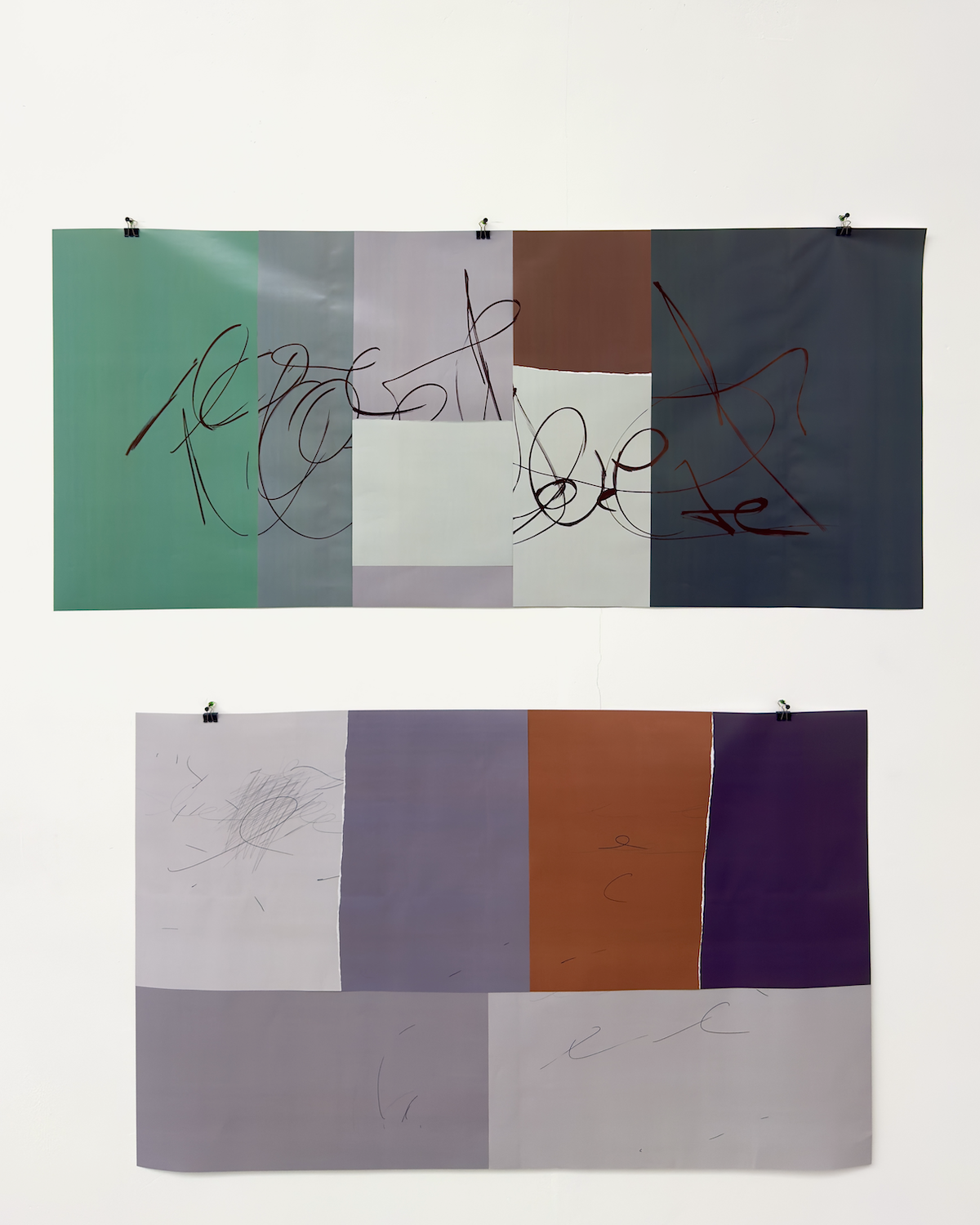
70 x 159 cm, marker on paper
e
Veronika Wenger 2026
83 x 134 cm, marker on paper
Songshan Lake Boxes Art Museum, Dongguan
Photo: Boxes Art Museum
For the exhibition at 松山湖盒子美术馆, I developed on site a series of analogue drawings on paper and coloured foils. The supports were papers and foils in gold, silver and copper tones, whose colour values I had derived from the visual identities of the three participating companies (睿华, 微石/拼酷, 净达环保). On these surfaces I engaged with drawing in the sense of disegno and communication: the line as world operation. The drawings emerged processually during the one-week stay, directly in the exhibition space, and were presented there.
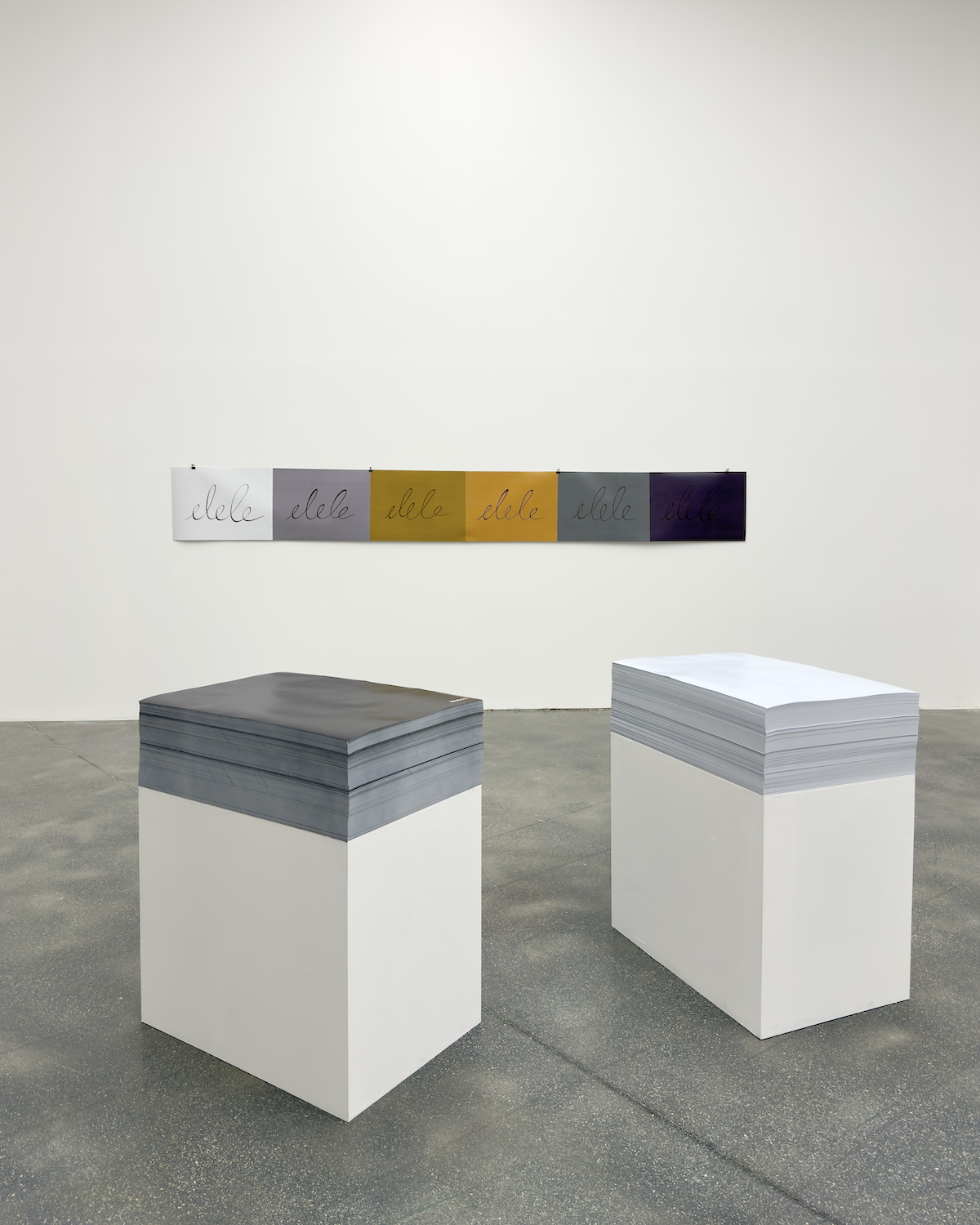
Veronika Wenger 2026
50 x 405 cm, marker on paper
Songshan Lake Boxes Art Museum, Dongguan
Photo: Boxes Art Museum
Material:
three colour palettes
Six colour tones are derived from each of the three companies;
printed as paper/foil, they form the drawing material:
For more than ten years I have been conducting artistic research on disegno – the line as a fundamental principle of form-giving. My work moves between analogue drawing and digital line, between ornament and abstraction, between material and code. The project [ɛl] carries this research into an international dialogue and explores how different cultural traditions work with line, ornament and repetition.
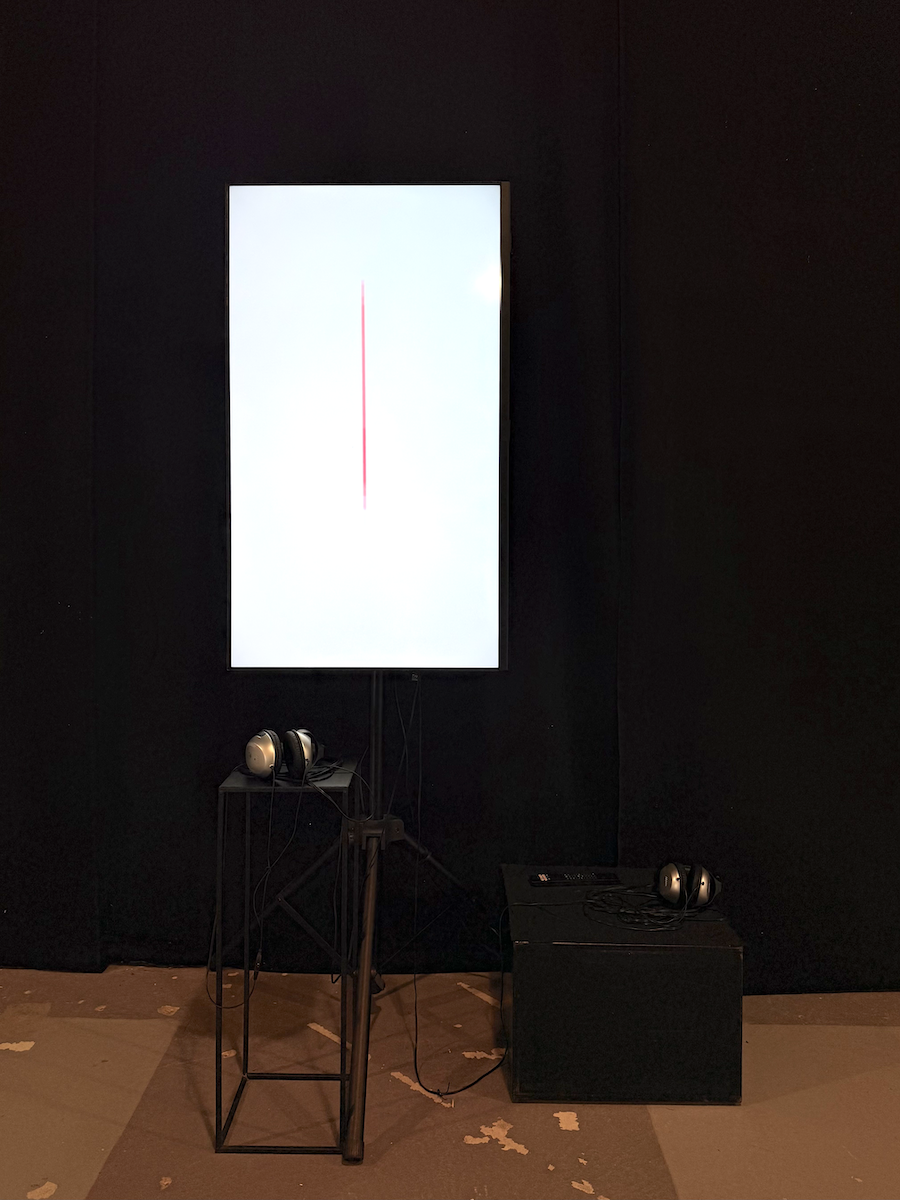
Veronika Wenger 2026
Full HD, Video 15 sec
EST Art Foundation, Leiden 2026
Photo: rhythmsection.de
What connects the ornamental traditions of different cultures? How does the world organise itself through repetition, variation and the concatenation of forms? And how does our understanding of line and ornament change in the age of digitisation?

100 x 65 cm, marker on plastic
Ornament is not decoration but a principle of order. Before people told stories in images, before they depicted gods and heroes, they created ornaments: lines that repeat the forms of nature – waves, spirals, branchings. These ornamental structures are found in all cultures because they follow a universal principle: the concatenation of distinctions, the sequencing of forms.
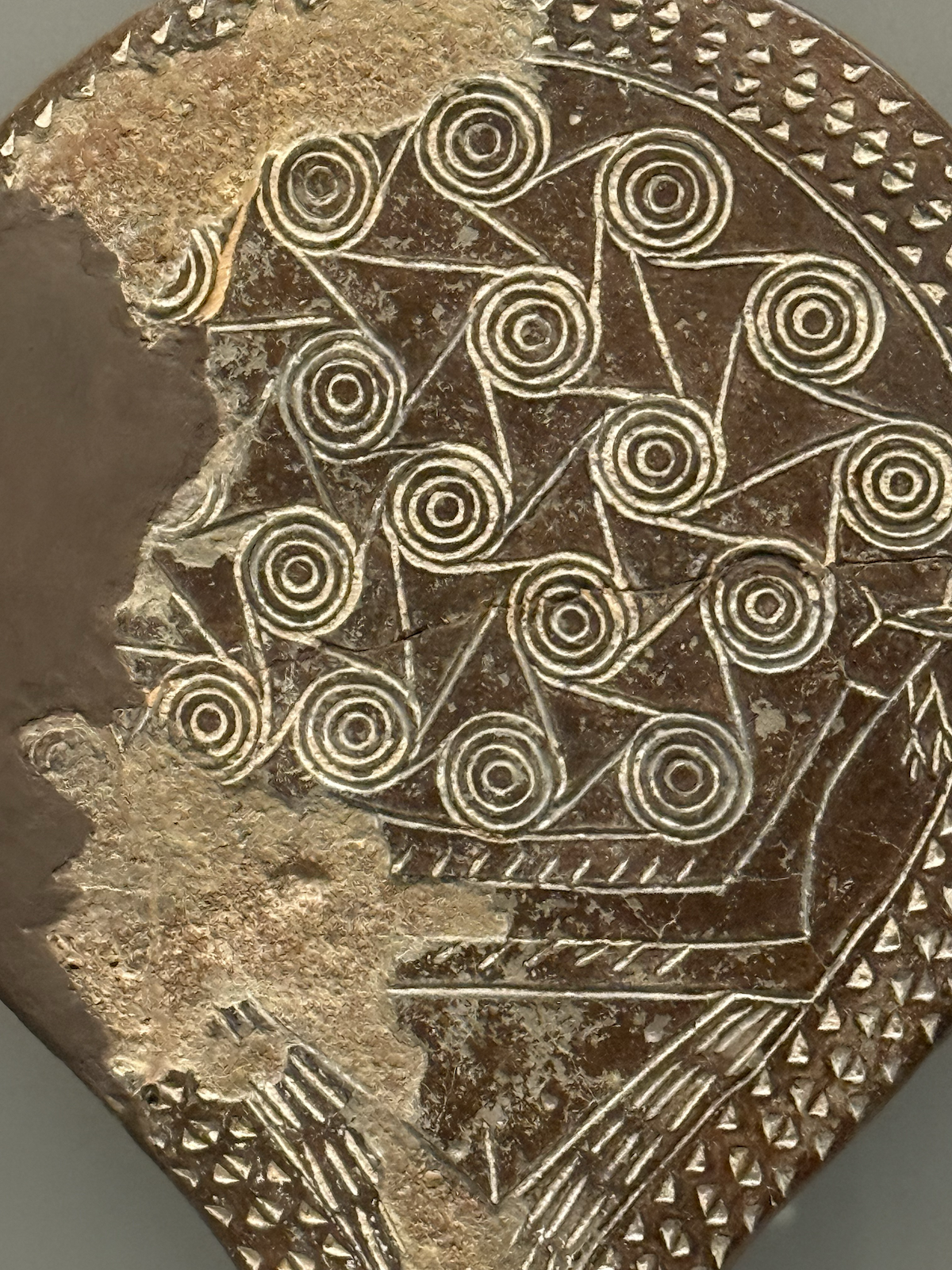
representation of an oared ship without sail, among spirals recalling foaming waves
2800-2300 BC
In my artistic research I have worked for years with the concept of disegno from Renaissance art theory. Disegno does not only mean “drawing” but the entire spectrum of form-giving: line and colour, ornament and symbol, writing and language. My works move between analogue drawing and digital line and investigate how the ontology of the line changes when it becomes digital.

Industrial manufacturing is patternisation to the highest degree. Series, standard and tolerance ensure that every product resembles the next, independent of place, hand and moment. In this, industry resembles writing as a system– and it is no coincidence that serial reproduction begins with the letter: the movable type developed by Bi Sheng (毕昇) in China around 1040, and by Gutenberg in Europe four centuries later. Yet every industrial product begins as disegno. The word design is related to disegno; both go back to the Latin designare, to mark out, to delimit. Before a product becomes pattern, it is drawn, tested, discarded – an open sequence of distinctions. Without this ornamental moment there would be nothing to repeat.
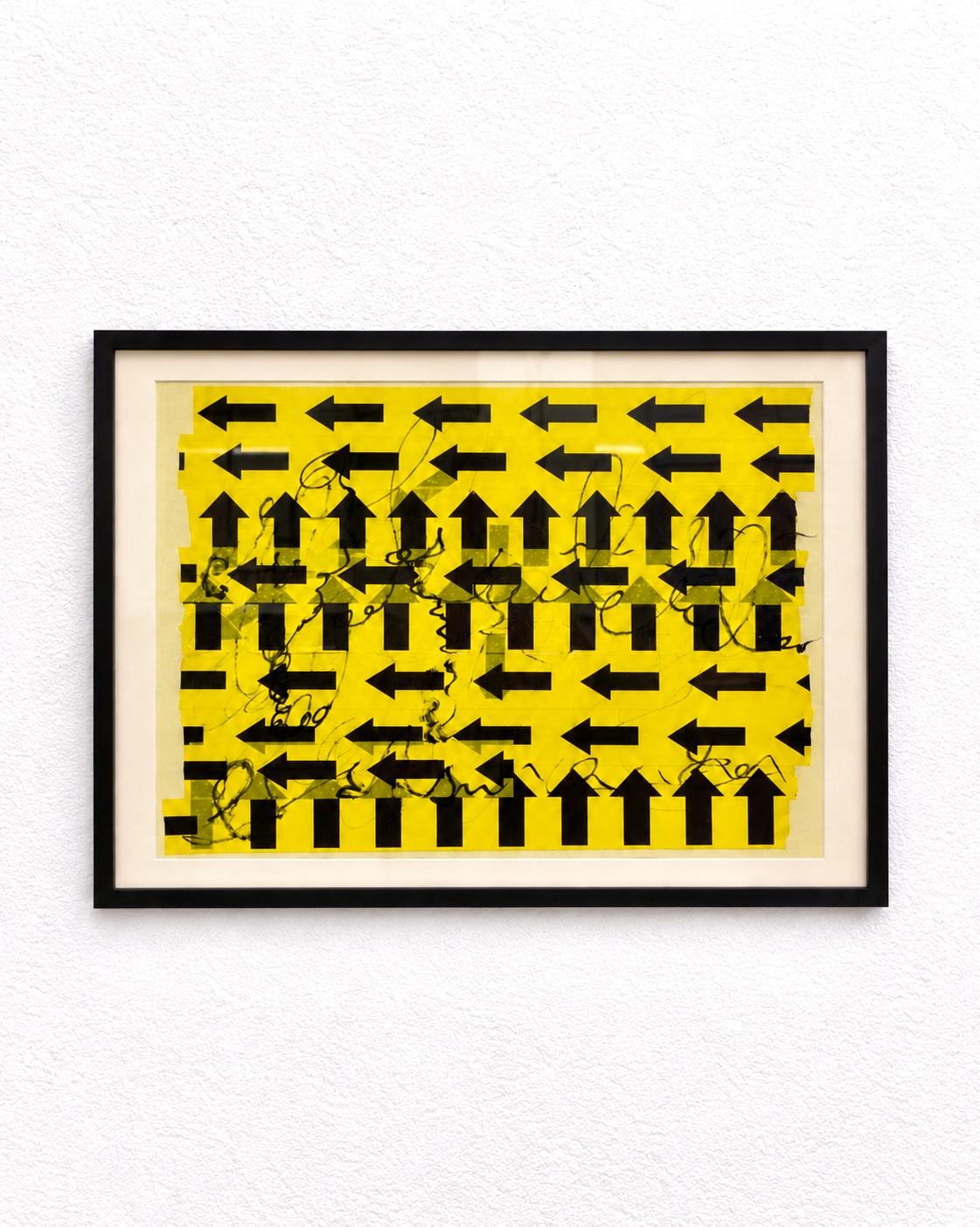
Veronika Wenger, 2026
Marker, tape on paper, 48 cm x 63 cm
EST Art Foundation, Leiden 2026
Photo: rhythmsection.de
In the Manufacturing Aesthetics project, both the line and the individual coloured papers became a continuous movement, an infinite line, an infinite sequence of distinctions in the form of colour and shape: line and colour as world operation, making the visible invisible and the invisible visible.
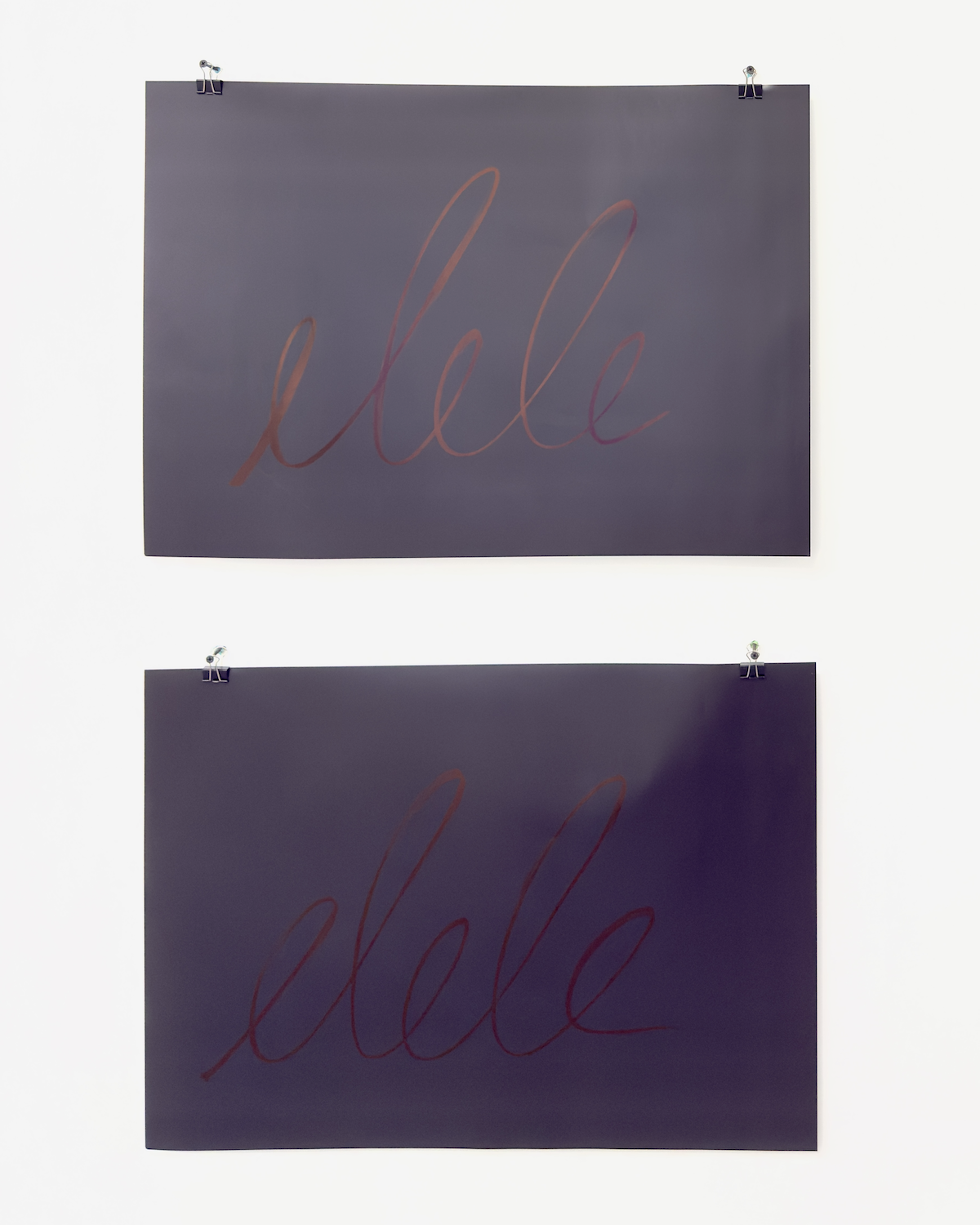
Veronika Wenger 2026
50 x 70 cm, marker on paper
Songshan Lake Boxes Art Museum, Dongguan
Photo: Boxes Art Museum
The Line as World Operation
Language lies between observation through the eyes and senses and its processing into communication. It is not an innocent, naturally given bond to the world, but a structuring medium that is itself already on its way to becoming a system: in order to be communicable, it forces fluid perception into first abstractions and categories, yet remains bound to the fleeting enactment of the voice and the moment.
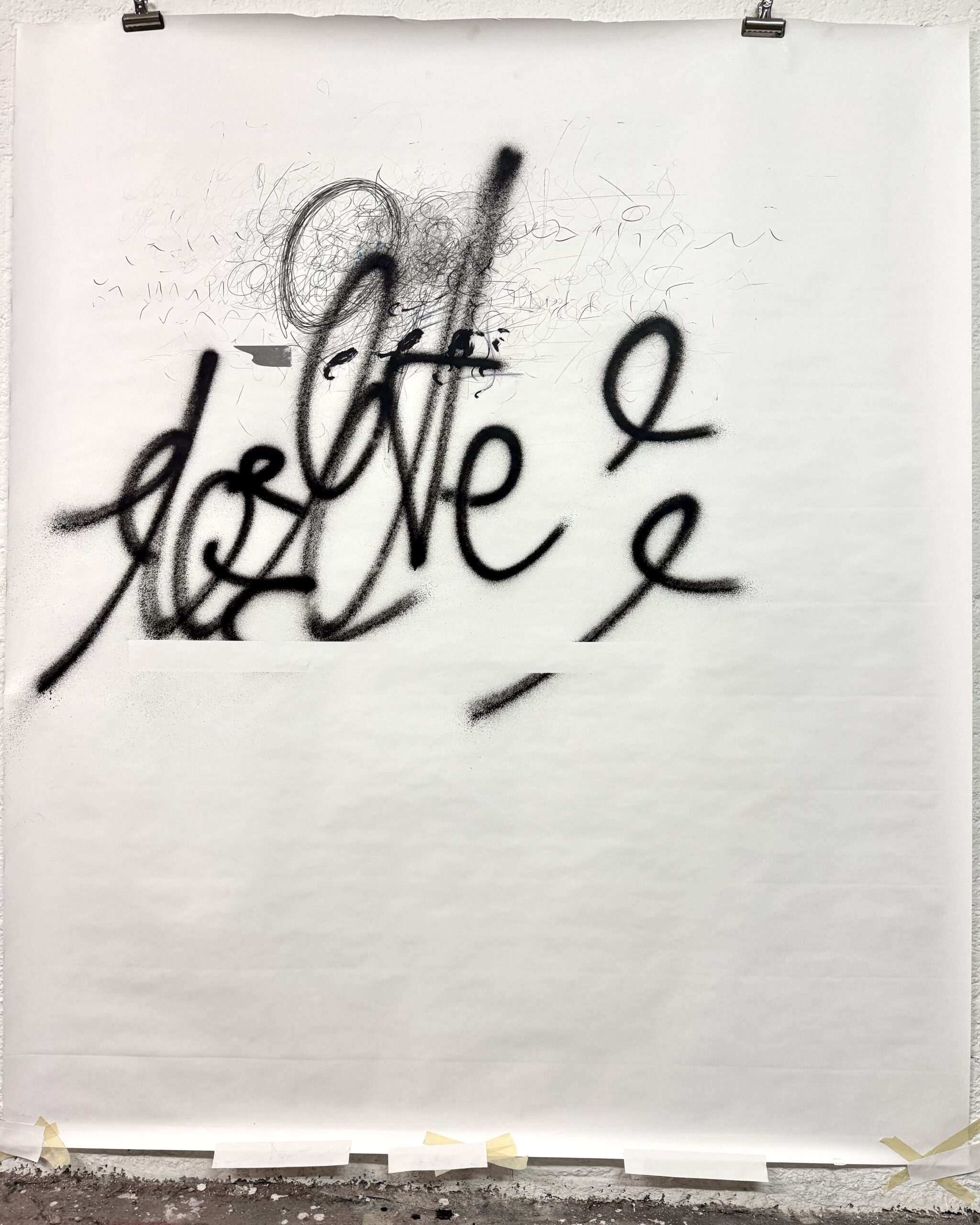
175 x 150 cm, spray, pencil, marker, tape on paper
Writing makes this intermediate zone visible and permanent: it renders the duration of speech visible through the movement and direction of the hand, and preserves in handwriting a singular trace of perception – its appearance in the world. This raises the question of whether writing closes the gap between the moment of seeing, the recognition of resemblances – in Foucault’s sense, The Order of Things – and communication.
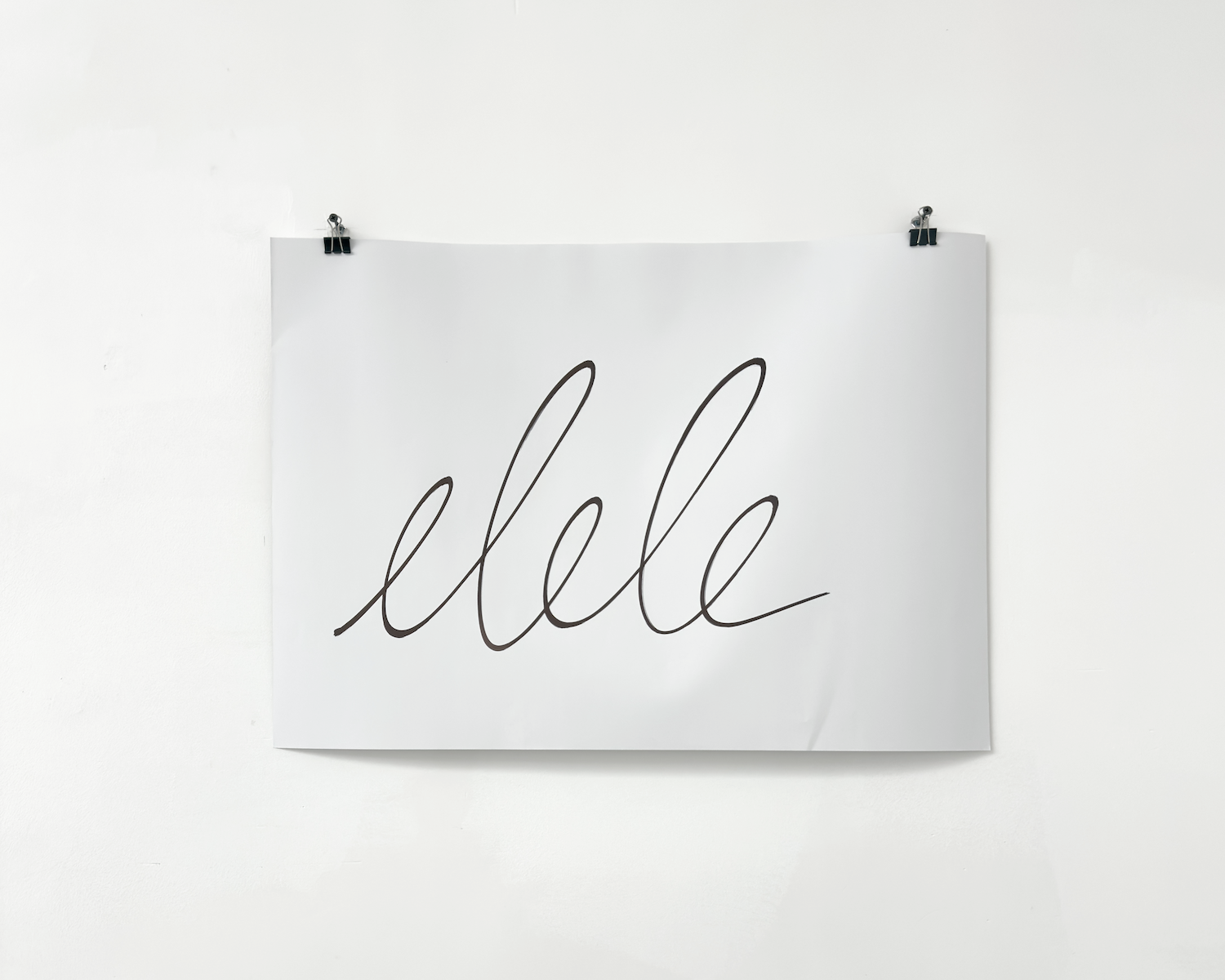
Veronika Wenger 2026
50 x 70 cm, marker on paper
Songshan Lake Boxes Art Museum, Dongguan
Photo: Boxes Art Museum
Writing does not close this gap. It holds it open as long as writing remains enactment, and closes it only apparently at the moment when writing completes the system already implicit in language – and thereby detaches itself from the world.
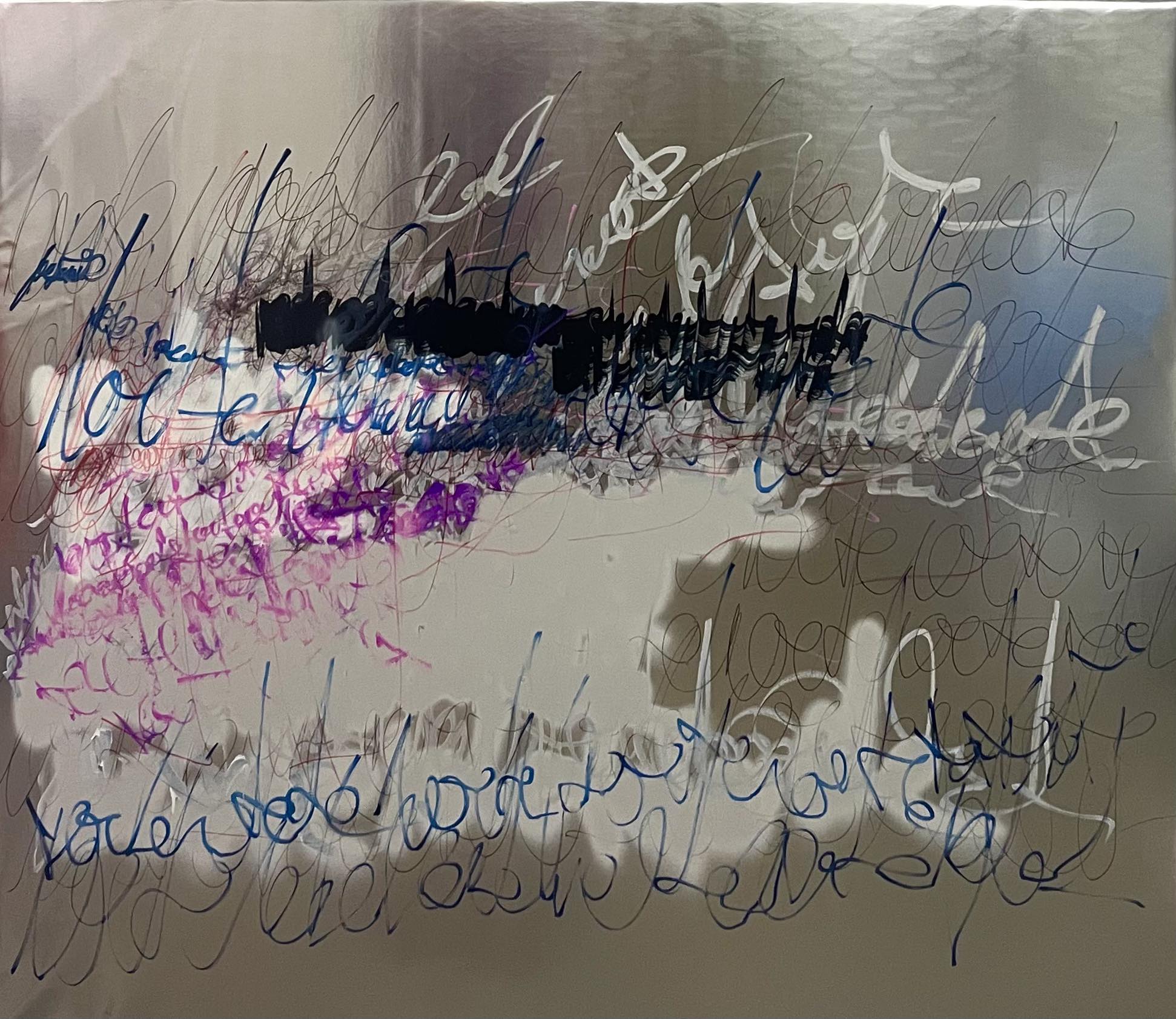
130 x 150 cm, marker, spray on synthetic fabric
This can be shown at the very origin of letters. Writing is not mimetic with respect to sounds, but operative with respect to visual distinctions, which it stabilises as signs; it takes up forms of the world, much as drawing and painting do, and converts them into signs. At the beginning stands Egyptian hieroglyphic script, a complex system of pictographic, ideographic and phonetic elements.

Veronika Wenger 2021
125 x 150 cm, marker, tape on paper
Proto-Sinaitic script belongs to that line of development in which Egyptian sign-forms were recoded for Semitic sound values, and which – through Phoenician, Greek and Etruscan transmission – ultimately proved consequential for the Latin alphabet as well. It does not simply continue the Egyptian system, however, but performs a radical reduction. Individual signs are detached from their complex context and acrophonically recoded: they now function as carriers of an initial sound. Aleph, an ox head, Bet, a house, Mem (a water line) can be read as examples of how the graphic motivation of a sign does not simply disappear in alphabetic transmission, but persists through transformation and conventionalisation: each of these signs first sets a visual distinction – contour against ground, inside against outside, movement against rest – and in this is nothing other than a drawing.
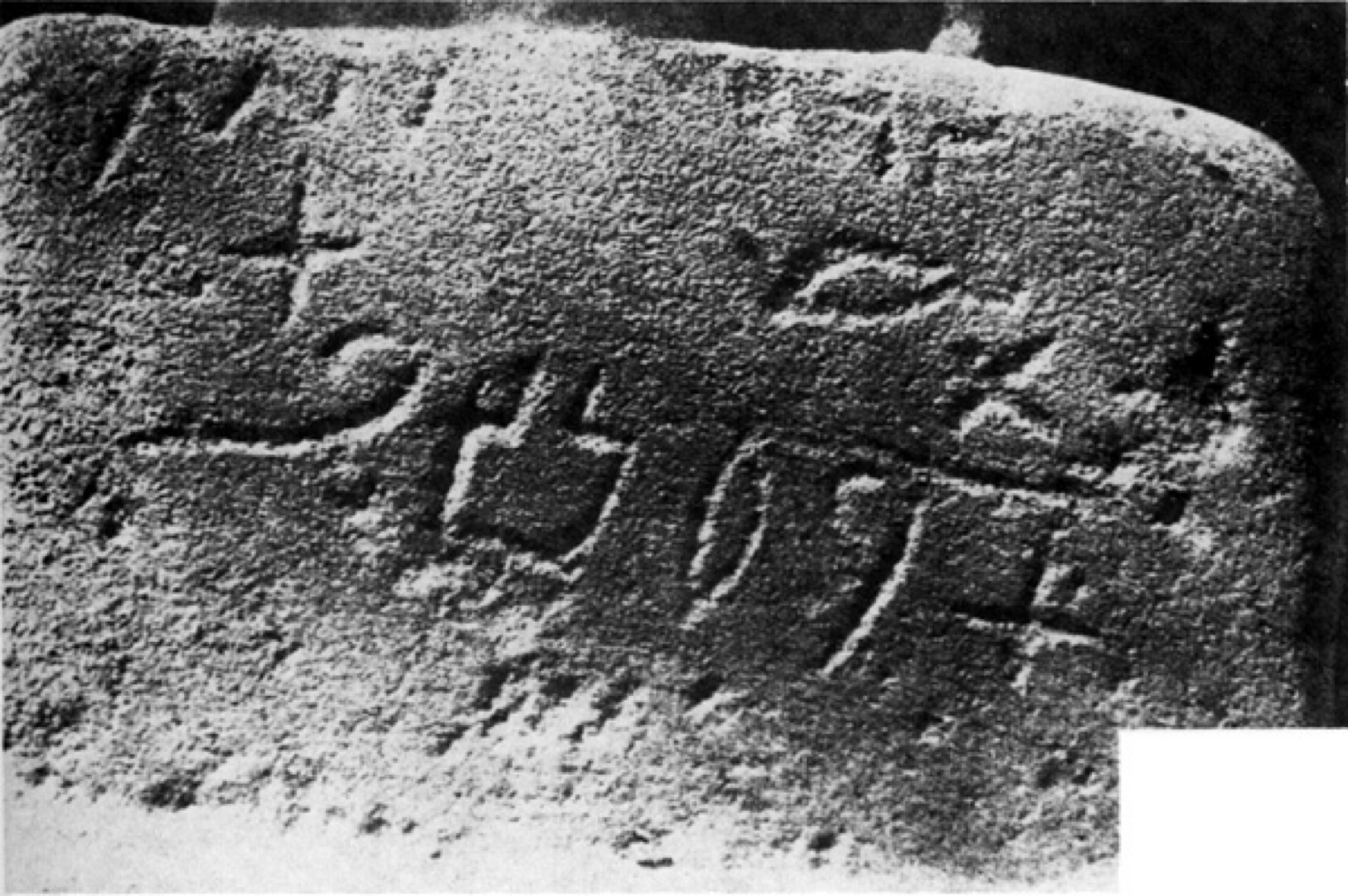
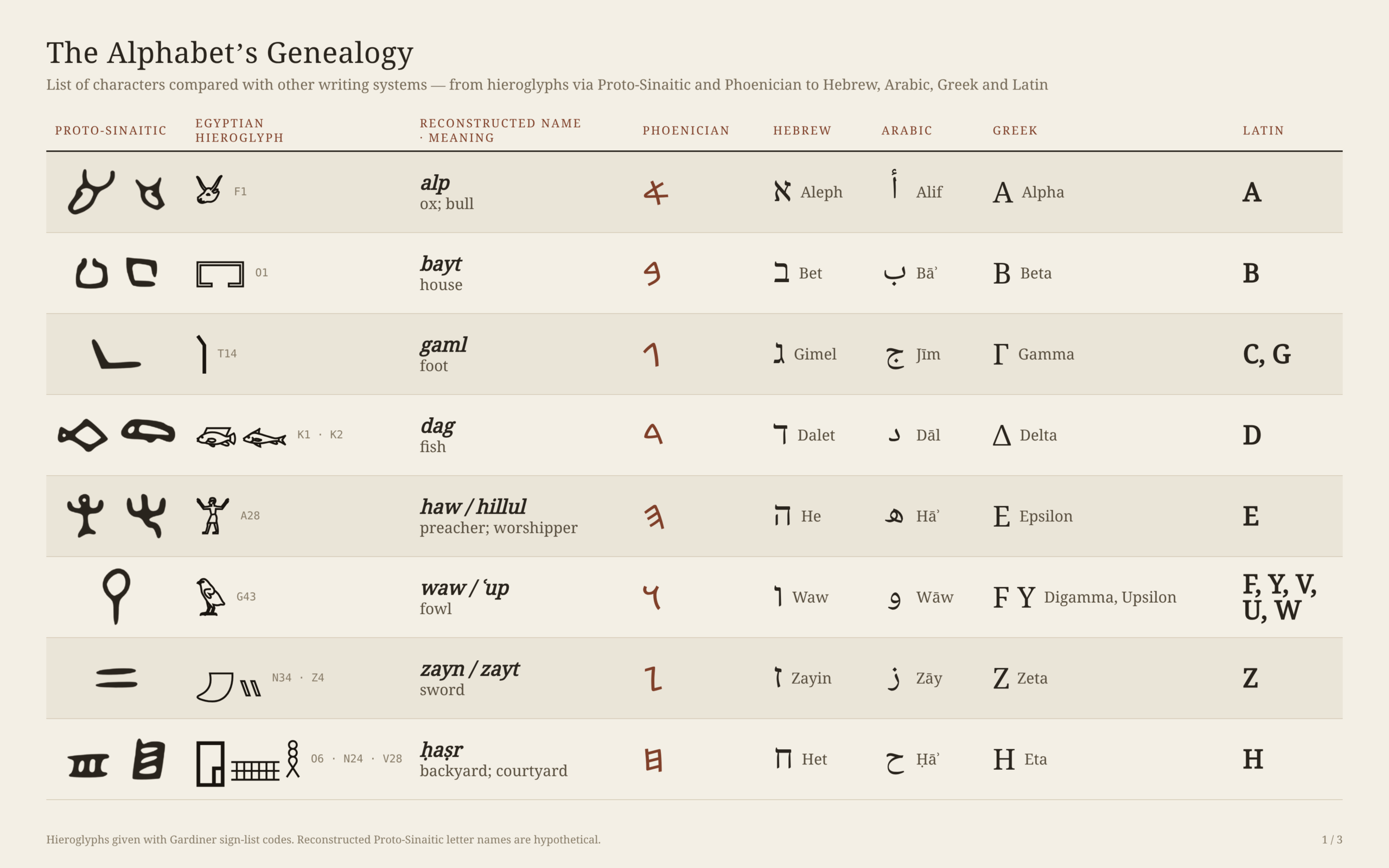
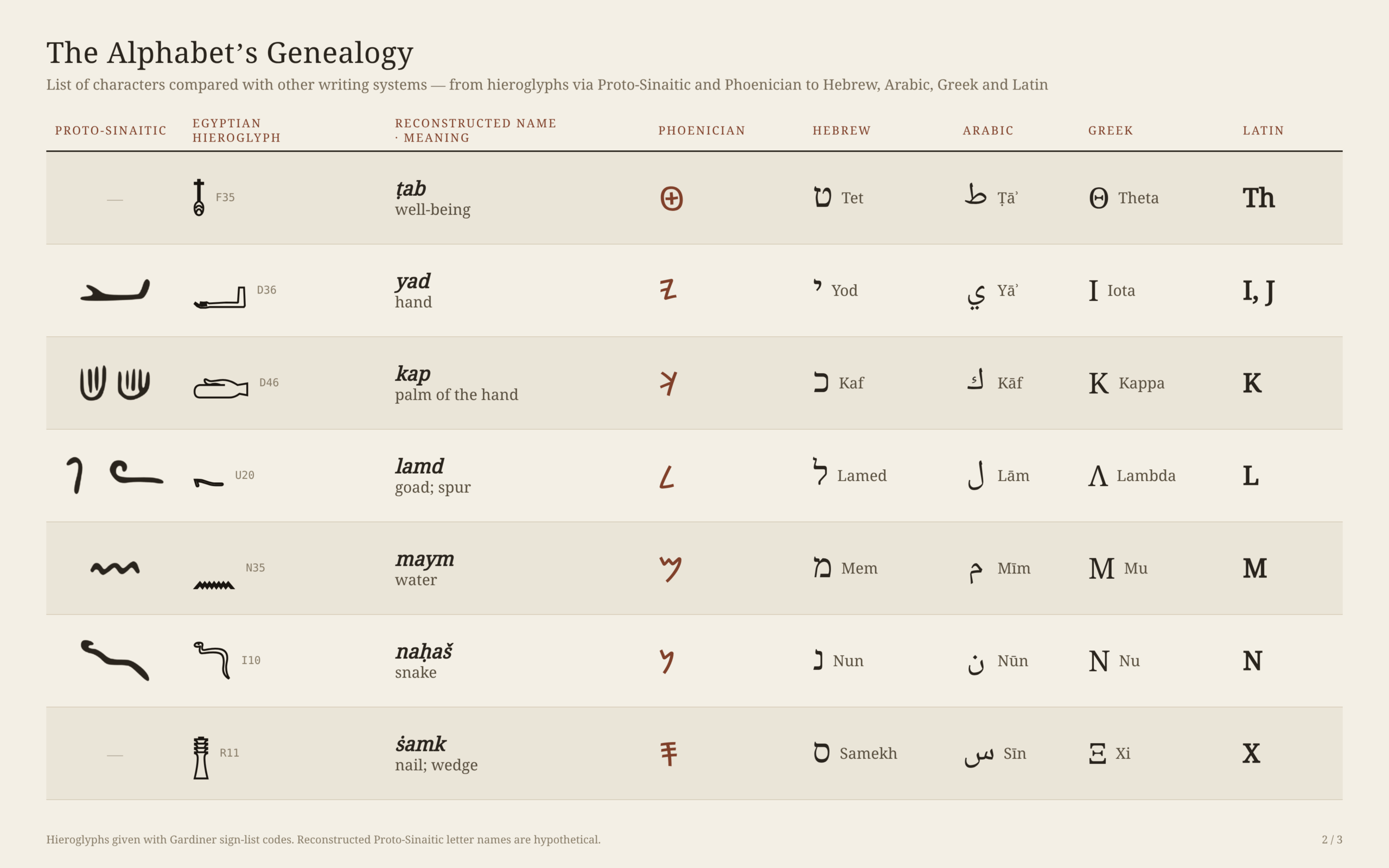
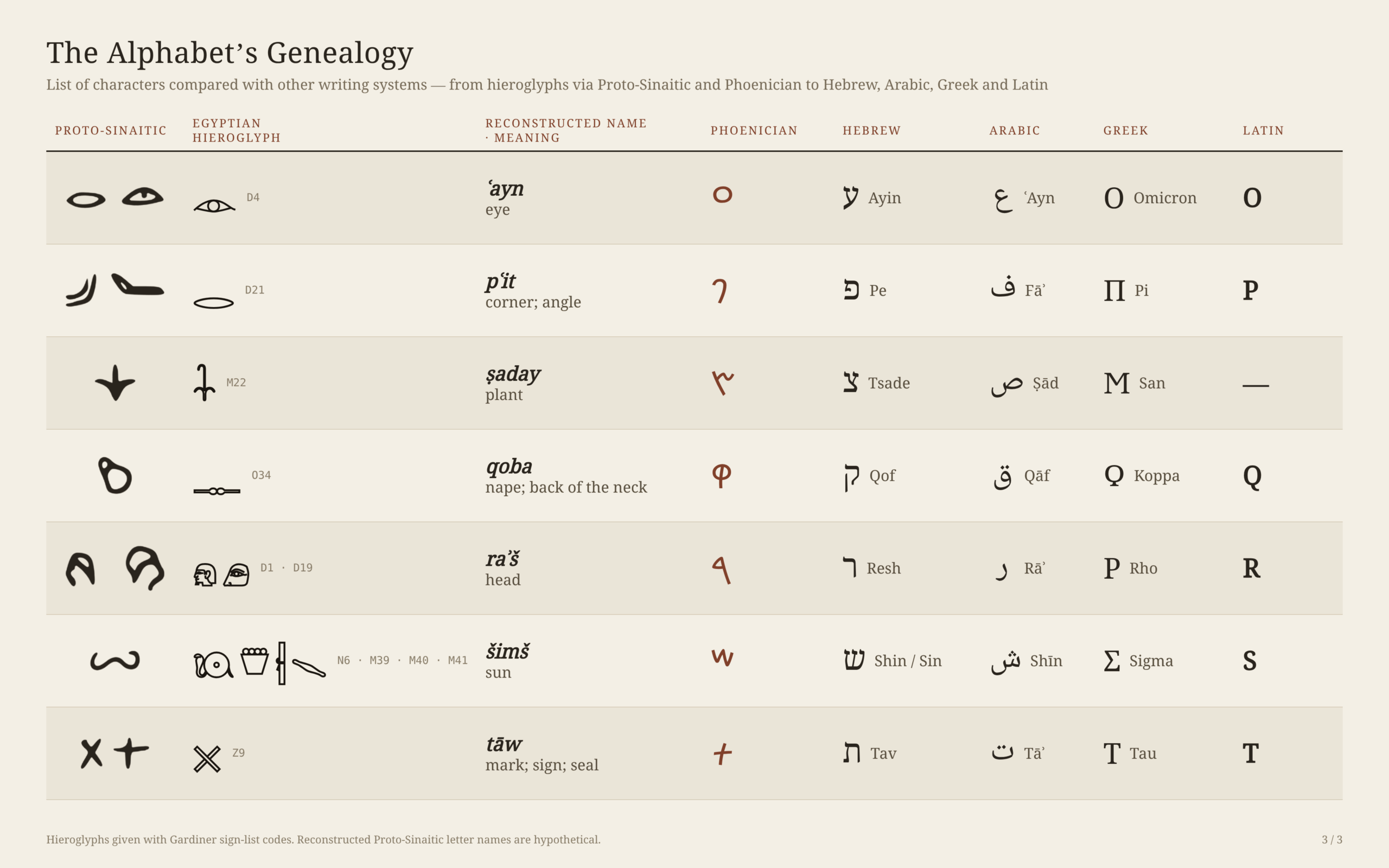
What is decisive is that abstraction does not set in gradually, but is already enacted in this first step. In Proto-Sinaitic use, the ox head is no longer an image; it has been selectively reduced to an initial sound. What happens here is not a gradual fading of resemblance, but an early operative cut – even if the becoming-system of language as a whole can be described as acceleration and completion. This direction is a tendency across many instances of sign-fixation; its enactment in any individual case remains an event, not a process. The form is detached from its iconic context and transferred into an operative structure that is reproducible independently of the world. The letter has emerged from ornament, has lost its world-reference, and henceforth functions only as pattern – a sign decoupled from the world, repeatable within the system.
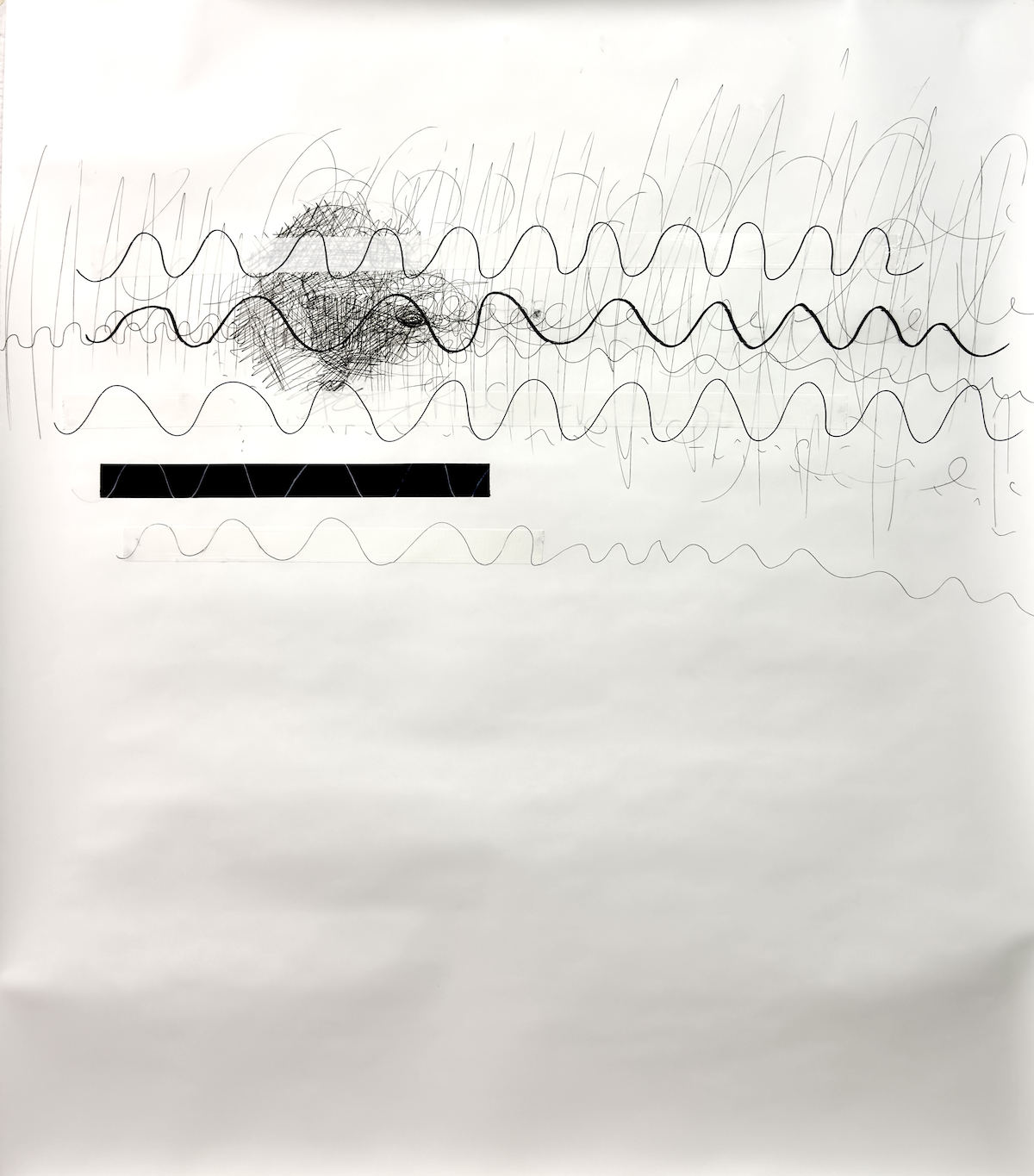
Veronika Wenger 2026
160 x 150 cm, marker, tape on paper
To grasp this cut, we need a concept of disegno that does not mean the subjective anticipation of a finished work in the artist’s mind – as the Vasari reception of the term suggests – but an operative form in the sense of Spencer-Brown and Luhmann. A line is disegno as soon as it sets a distinction – form and ground, inside and outside, contour and surface – and thereby constitutes a form that exists only in the moment of the operation. Disegno is not the representation of an already given object, but the moment in which, through drawing, an object first appears as bounded at all.

Veronika Wenger 2023
150 x 130 cm, marker on synthetic fabric
Form arises, according to Spencer-Brown, from a distinction that presupposes both sides but actualises only one: every line marks the form, while the ground is co-constituted in the same act but not shown – it disappears as the self-evident background. This disappearance already presupposes the frame, which cuts a piece out of the infinite and thereby first makes form and ground distinguishable. It is precisely this asymmetry that enables line, letter and figure to produce what one might call a reality effect: the impression of a given world, arising from the fact that we no longer perceive the result of a distinction as an operation, but as something that is simply there.
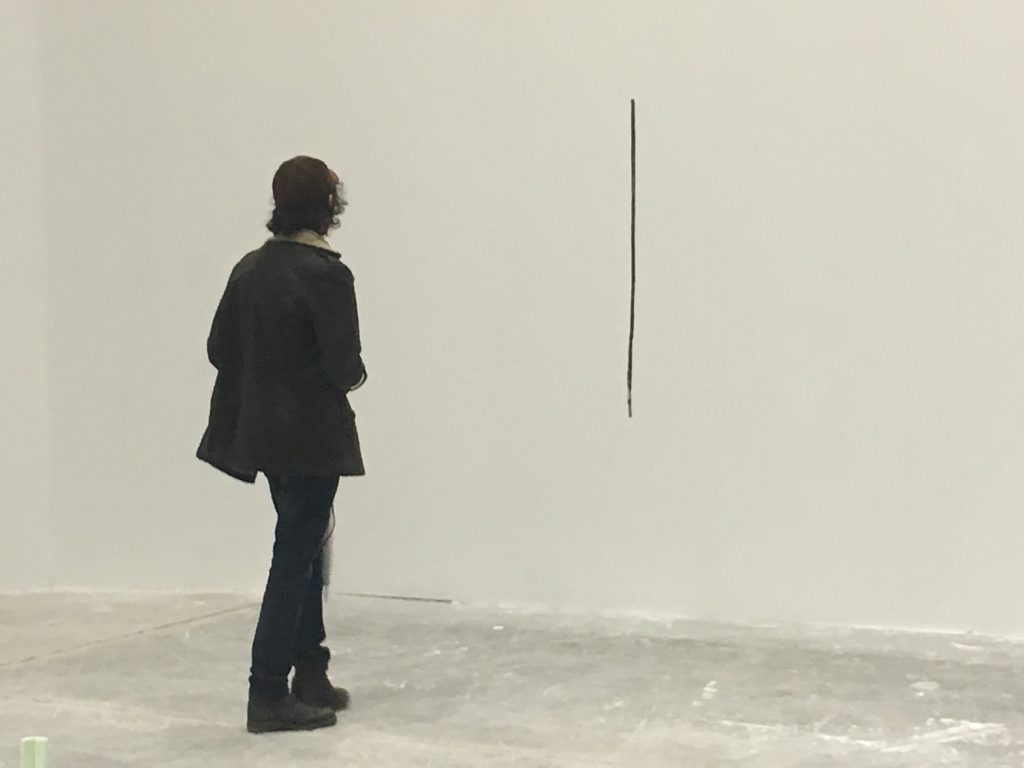
Art Fair Tüyap, Istanbul
Disegno exists, in Luhmann’s terminology, only as a momentarily flashing operation, and stabilises itself in time by connecting to its own results – a chain that continually re-actualises the distinction of form and ground and thereby generates its own level of reality of the visible.

130 x 150 cm, marker, spray on synthetic fabric
Drawing and writing can thus genuinely be brought into alignment: Aleph, Bet and Mem are nothing other than disegno gestures – lines that set a distinction before they become pattern through the acrophonic principle. The letter is a stabilised, sedimented disegno gesture: a line that has detached itself from a concrete, singular act of drawing and now circulates as a repeatable sign, without its origin needing to be thought along with it. Drawing remains the situational enactment of the distinction; writing is the extracted, normalised form of this distinction, drawn from many such enactments. Writing thus does not stand beside drawing – it emerges from it, as drawing’s radically abstracted form of memory.
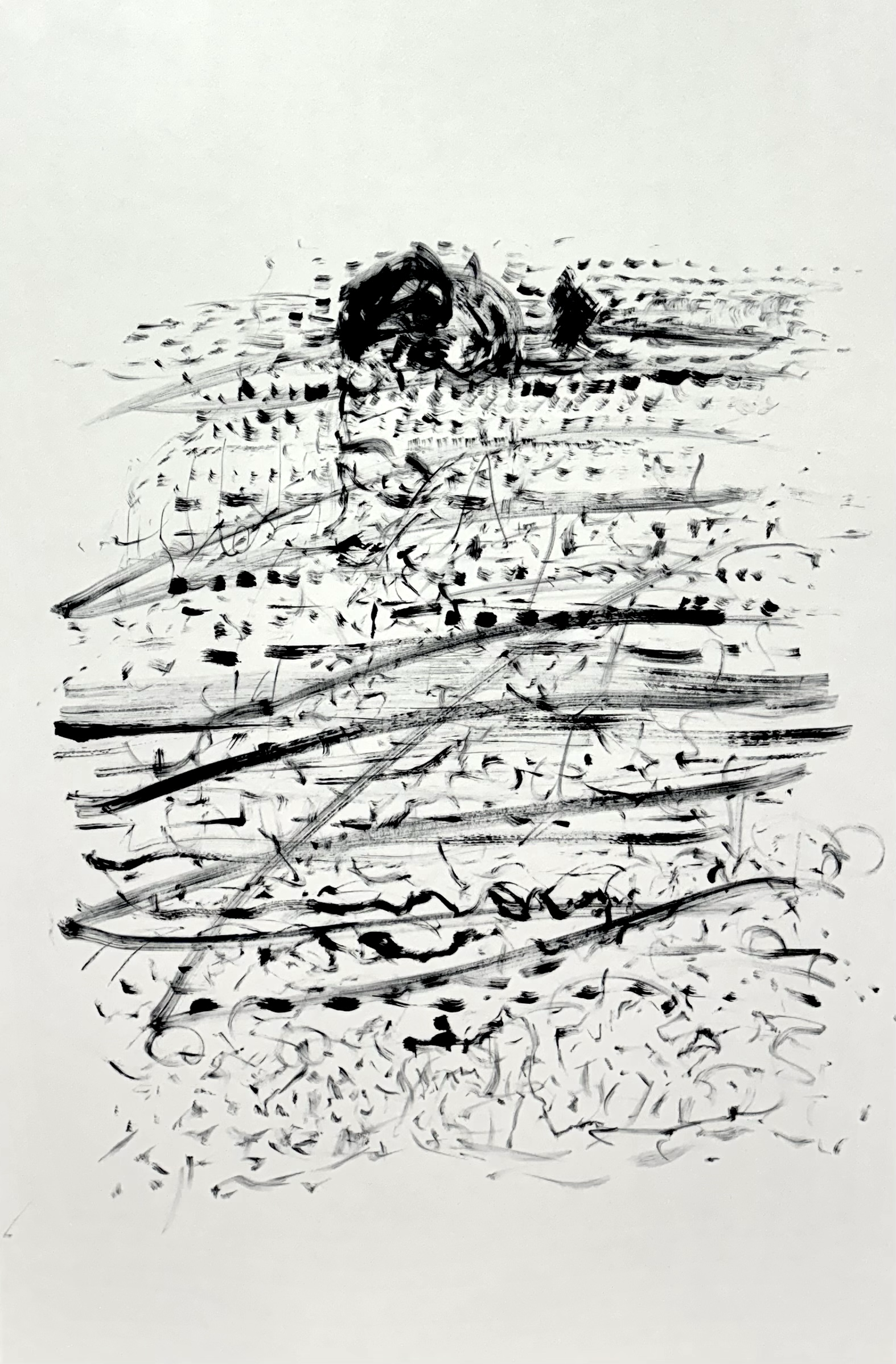
Veronika Wenger 2024
100 x 65 cm, marker on plastic
The difference between drawing and writing therefore lies not in the medium, but in the degree of patternisation. Both are operations of distinction; both can remain ornamental – bound to the world, iconically legible – or become pattern: internally repeatable, formally operative, referencing within the system. Drawing in the sense of disegno maintains a high degree of processuality and visible enactment, still bound to perception. Alphabetic writing has reached the degree of maximal standardisation: drawing that has become invisible, pure repeatability.
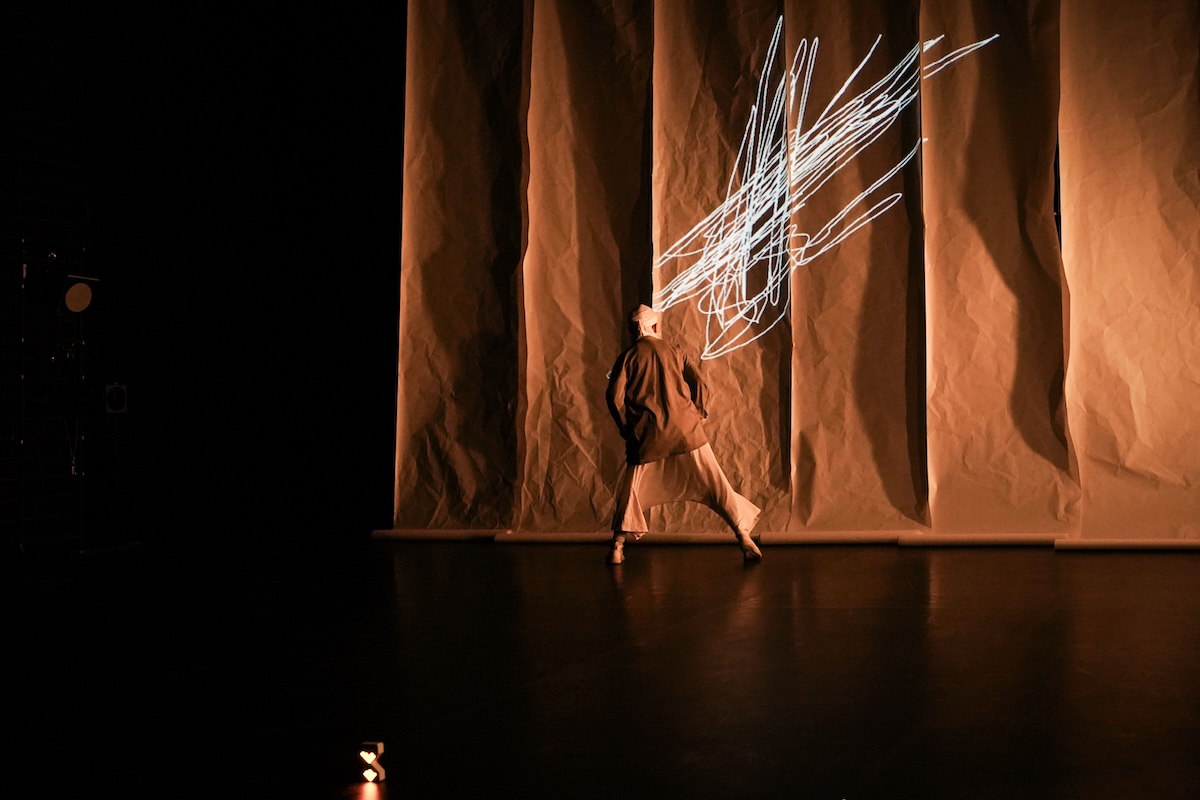
Institut Del Teatre Diputació Barcelona
2026
Photo: Ilaria Salvagno
The flow of language becomes a knowledge that – the more it refers to what has been written down rather than to the exploration of resemblances – increasingly detaches itself from its operative enactment and becomes the mere idea of knowledge; following precisely the same distinction that lies between an image from the imagination and an enacted drawing or painting. Writing does not conceal the world by eventually becoming arbitrary. It accelerates and completes the becoming-system already implicit in language as a tool of communication. By allowing fleeting operations to congeal into permanent pattern, it constitutes the very level on which the world can appear as concealable.
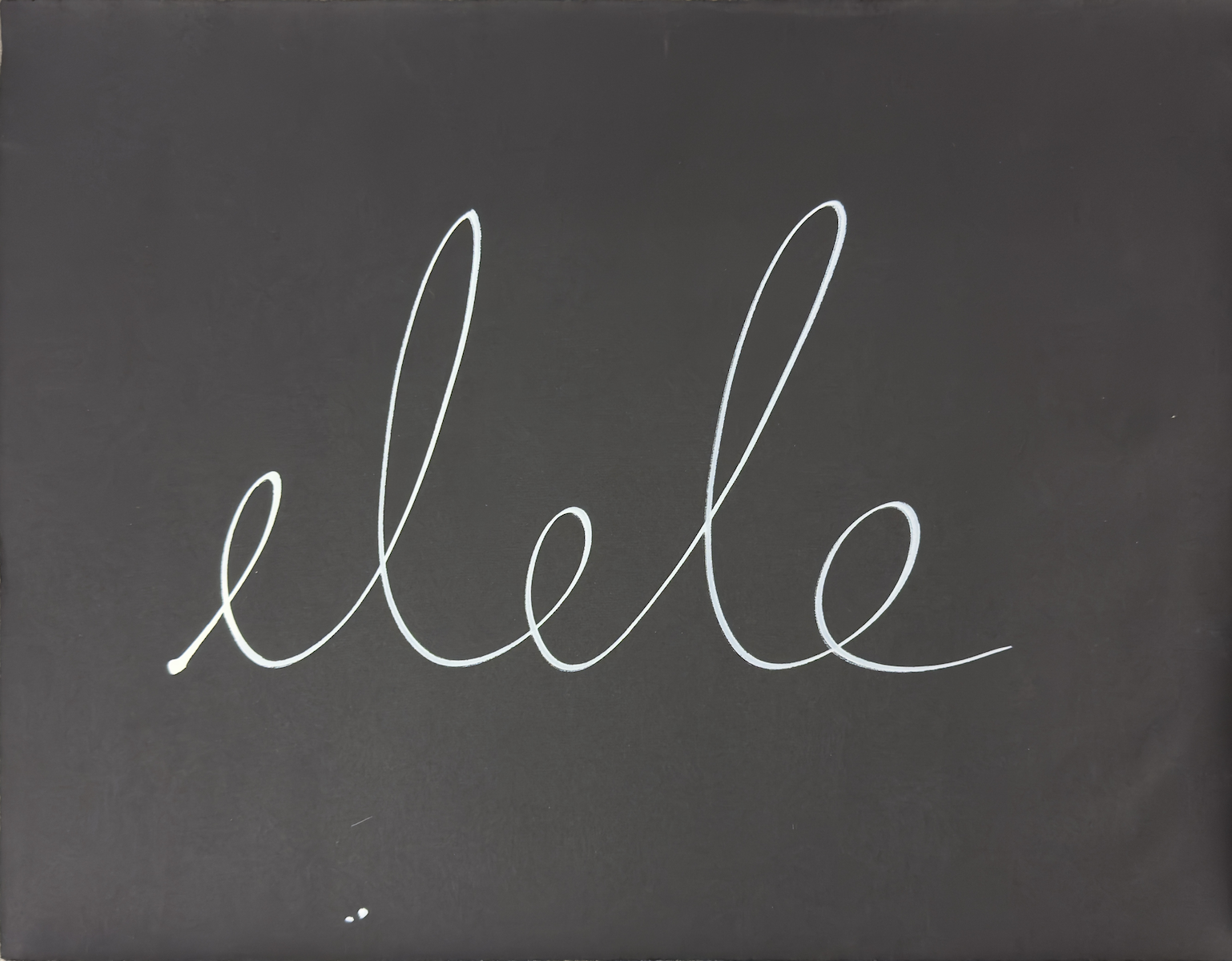
Veronika Wenger 2026
48 x 62 cm, marker on paper

120 x 100 cm, marker, tape, spray, pencil on paper
The frame was already presupposed in all of this, without itself having been questioned. It extracts a piece of the infinite, protects it, and thereby enables its reintegration into the infinite ornament of the world – that is its fundamental movement, when one considers it in its own right. The frame is thus not an external addition to the drawing, but the spatial unfolding of what is already implicit in disegno: the operative cut that sets a distinction and thereby brings forth form. What appears in the line as the distinction of form and ground is held fast in the frame – as the separation of inside and outside, as a distinction that can not only be enacted but preserved.

Photo: Boxes Art Museum
Ornament here designates not mere decoration, but the open, world-bound movement of such sequences of distinctions – a configuration that is not closed but potentially continues into the infinite. Ornament is itself world operation: a resource from which ever new distinctions can be drawn, without it ever being exhausted or closed. Pattern, by contrast, is a form in which distinctions are detached from this context, held fast, and made available as repeatable units.
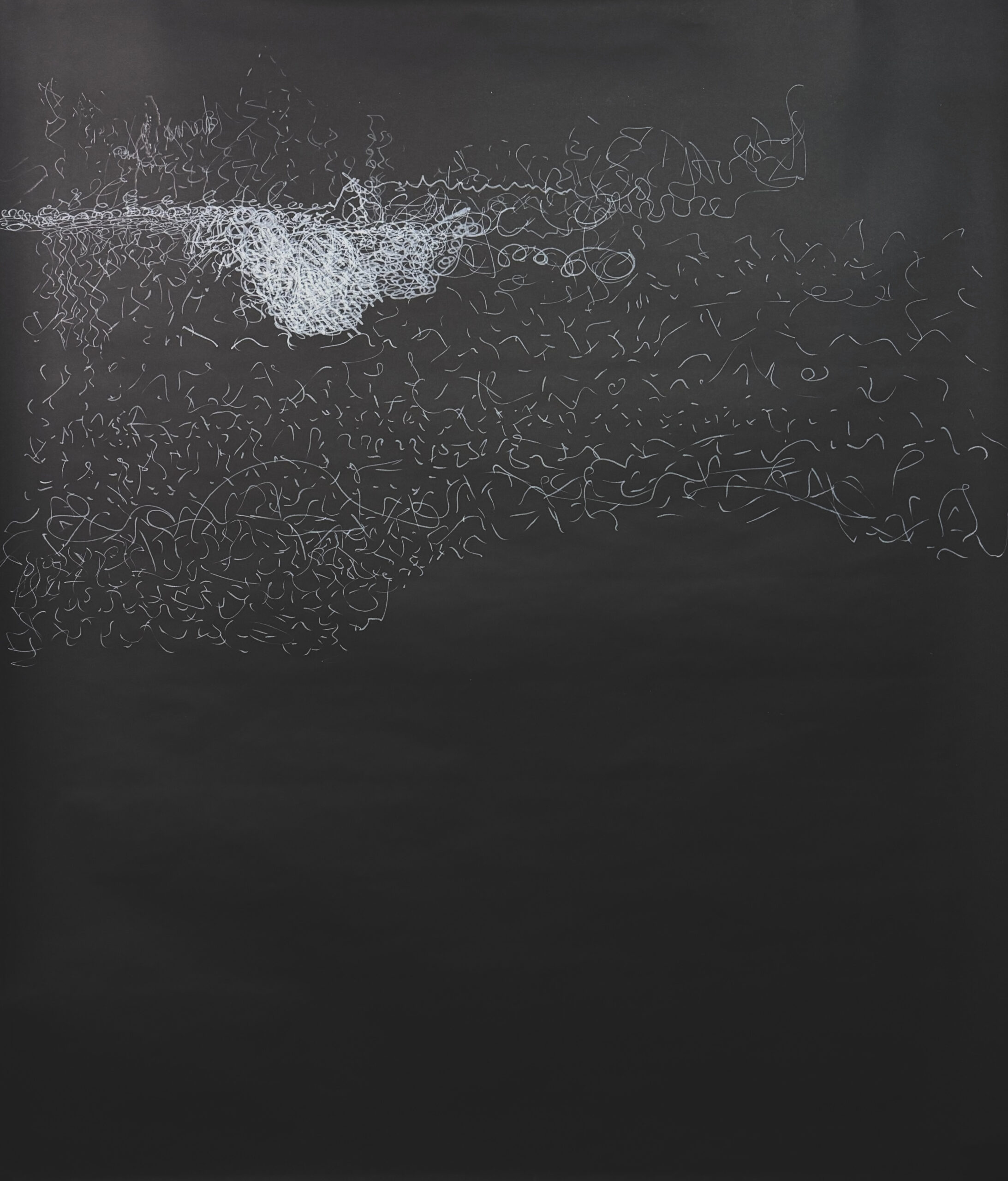
175 x 150 cm, marker on paper
On paper, distinction and its preservation coincide. The physical edge of the sheet cuts a finite piece out of the teeming world and simultaneously holds this distinction fast. The paper can be stored, withdrawn from public access and from decay. Through this set distinction, the sheet can return to the world as a work – no longer as a fragment, but as communication about the world. The sheet itself remains a singular, unrepeatable thing and thereby part of ornament; what becomes pattern is not the paper, but the distinction it holds fast – which can detach itself from its carrier through transcription, copy, citation.
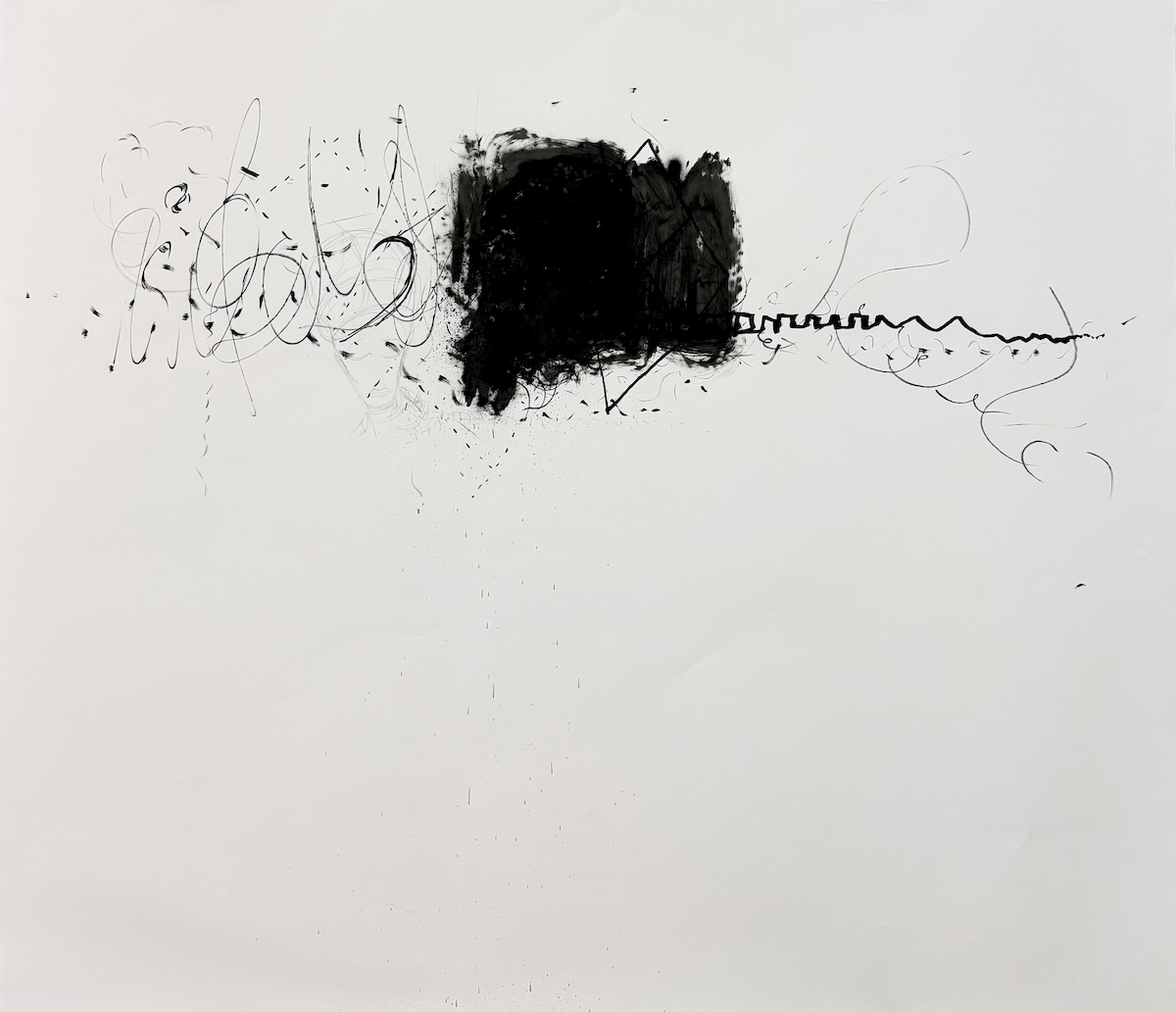
Veronika Wenger, 2026
150 x 168 cm, marker, pencil, spray on paper
On the wall there is no physical edge that separates a distinction from its surroundings and holds it fast – the wall is not separated from the world, but part of its public architecture. The line drawn with a marking instrument does set a distinction, but it remains bound to the moment of its enactment; it is not held fast as it is on paper. The operative cut does not unfold here into a lasting separation of inside and outside. Hardly any stable frame-context remains: the line is the world operation delivered over to the world and to others. It can weather, be painted over, scratched away – down to the ghost trace, engraved and erased again. The distinction remains part of ornament, an open event that does not transfer into pattern.

Photo © Rhythm Section
On the digital surface a fundamental phenomenon of doubling arises. On the one hand, the distinction is given from the outset as a frame – the size of the screen or of the opened workspace determines within which boundaries drawing takes place. For the person drawing, the movement presents itself phenomenologically as immediate, processual drawing. At the level of technical infrastructure, however, the line exists from the very first moment as discrete code, as vector or raster – that is, already in the logic of pattern.

Veronika Wenger 2020
Full HD, digital drawing
Digital Art Space München 2021
Yet for the person drawing, distinction and its lasting preservation do not coincide: the fleeting stroke exists on the surface, but remains exposed to mere non-existence as long as it is not saved. While the line on the wall is delivered over to the world, the digital line is exposed to passing away in the transient. Only the act of saving definitively transfers the perceived distinction, for the person drawing as well, into a lasting, system-internally retrievable pattern – as repeatable form. Therein lies the paradox of the digital: in the phenomenology of experience, the first stroke is processual drawing in ornament; in its medial structure, however, it is always already enacted pattern.
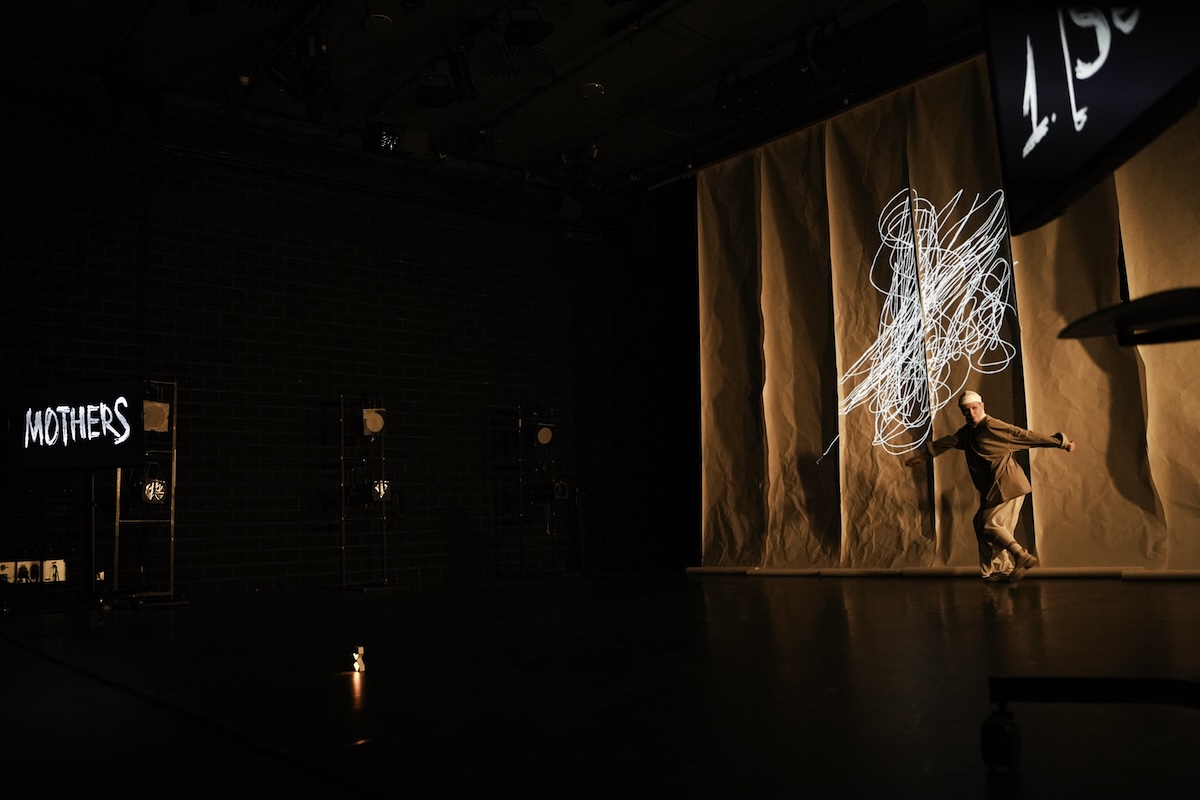
Colour, too, knows the movement from ornament to pattern. As a hex value or Pantone number, it is completely detached from its carrier:
#D4AF37 is the same value everywhere in the world, endlessly repeatable and transferable – a letter of colour. On metallic paper, by contrast, the same colour is never the same twice. Gloss, matteness and fibre change it with the light, the angle of view and the movement of the viewer. Tellingly, the very screen on which the hex value is created cannot show metallic: the gloss lies in the pigment, not in the code. Here the paradox of the digital returns: in code, colour is pattern; in material, it becomes ornament again.

130 x 150 cm, spray, marker on synthetic fabric
What begins in disegno as an operative line appears, depending on the medium, as a fleeting event in ornament or as a repeatable form in pattern – as drawing, as painting, as writing and as language, each binding itself to its own line.
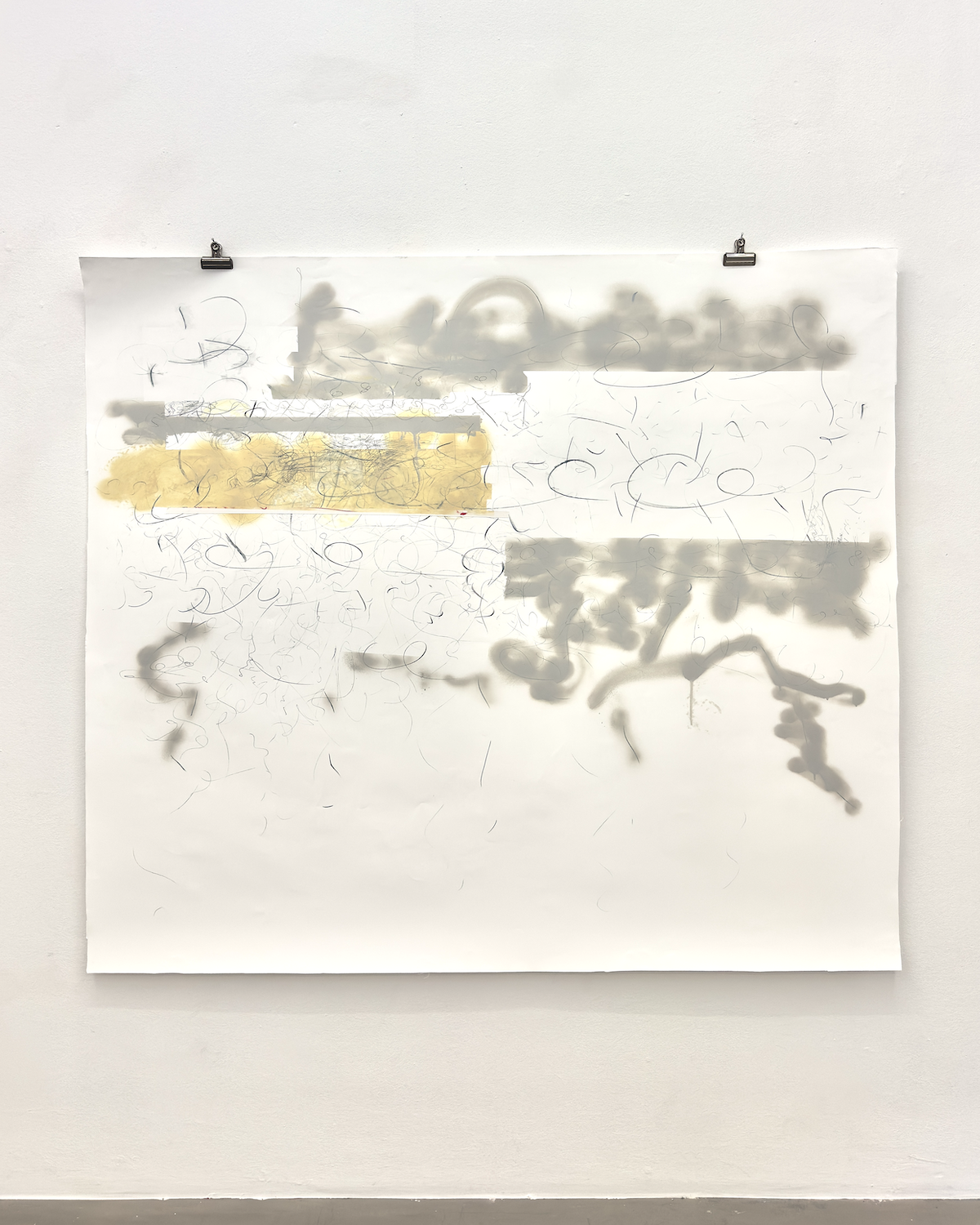
Veronika Wenger 2026
149 x 168 cm, pencil, marker, spray on paper
Digital Art Space, Munich
The title of my solo exhibition at the Digital Art Space in Munich, [ɛl], is the line with the sound by which it is spoken. That language shows itself in this sign is not due to the line, but to the knowledge of the line as spoken language and notation. At the same time, the line as a sign for the sound makes visible what writing makes visible: the duration and direction of speaking, the sound as an event in time. It begins with the line as distinction, as it stands at the origin of letters.
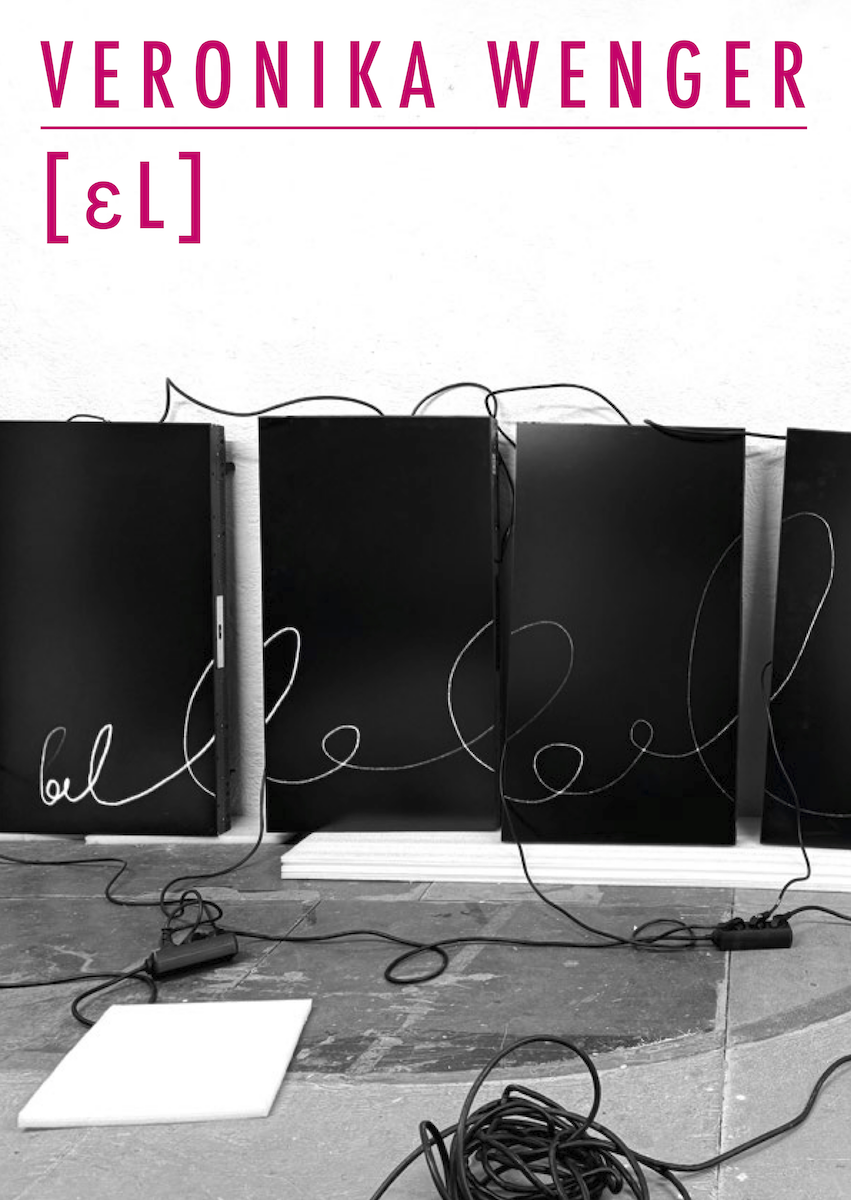
In analogue drawing, movement shows itself through the trace of the material it leaves behind.

Veronika Wenger, 2026
149 x 168 cm, marker, pencil, tape, spray on paper
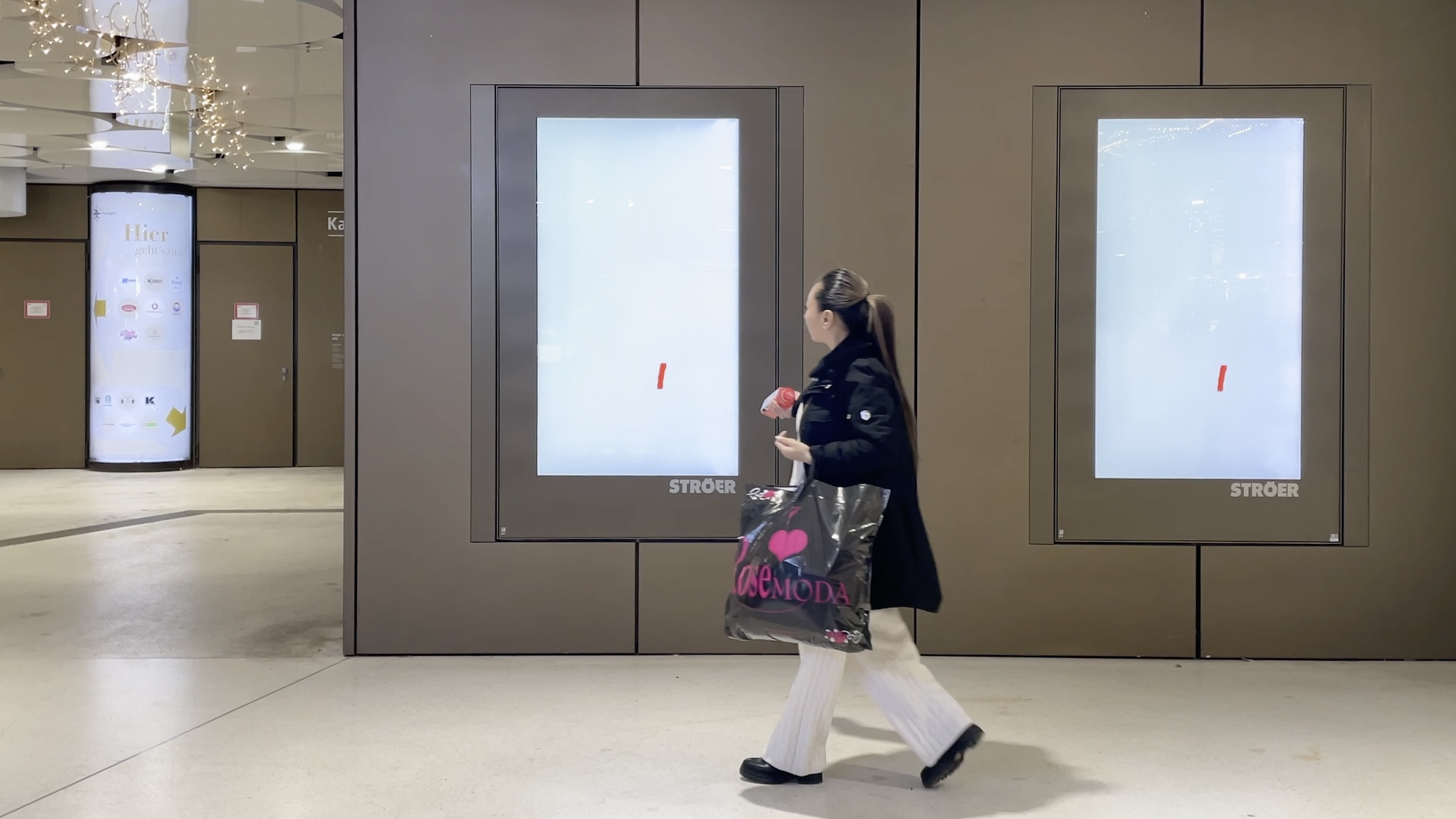
In digital drawing, movement shows itself through the possibility of recording. It is ornament in appearance and pattern in structure. The direction that becomes legible in the trace recedes in the loop, because beginning and end pass into one another.
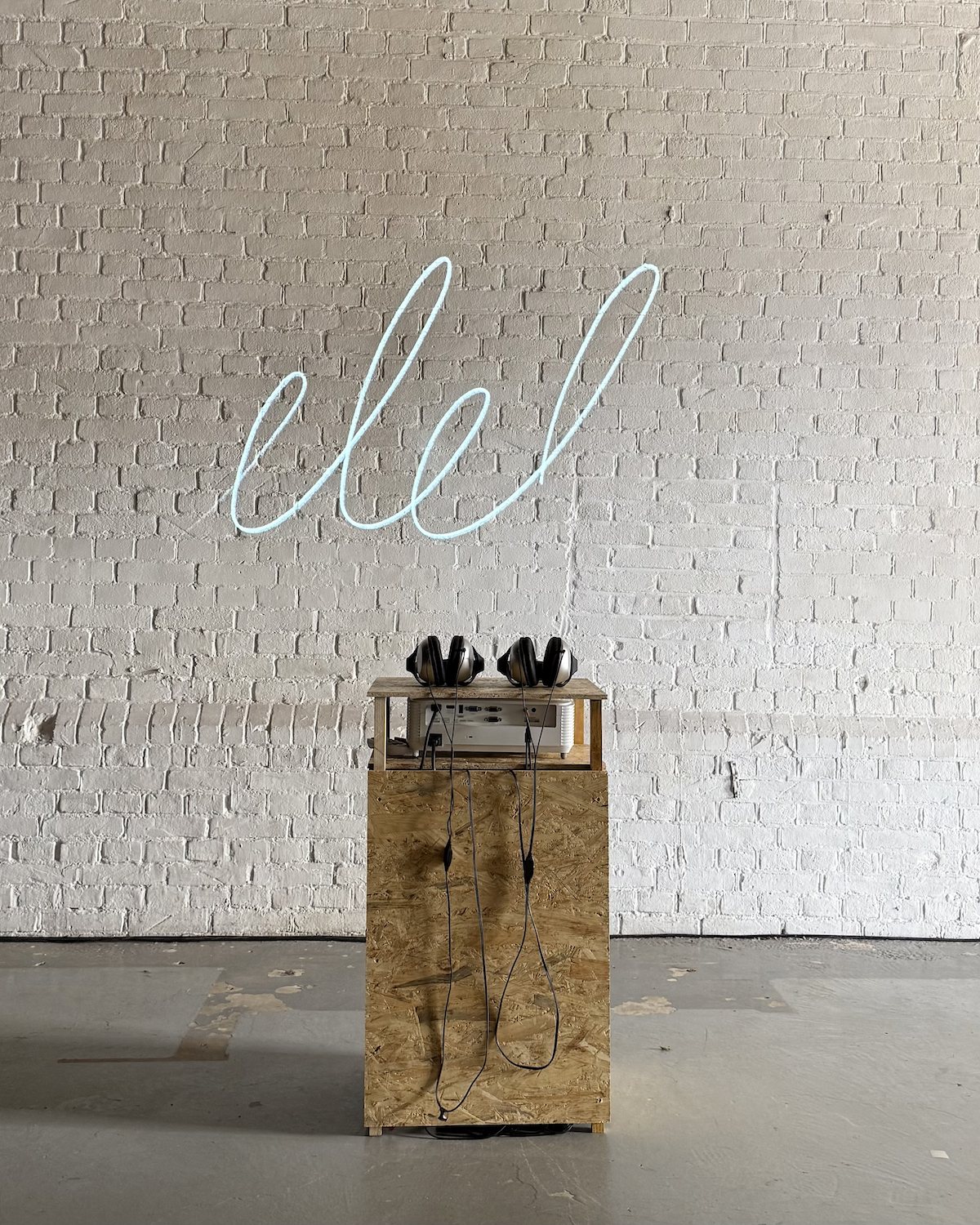
Veronika Wenger 2026
Full HD, Video 15 sec
Photo: rhythmsection.de
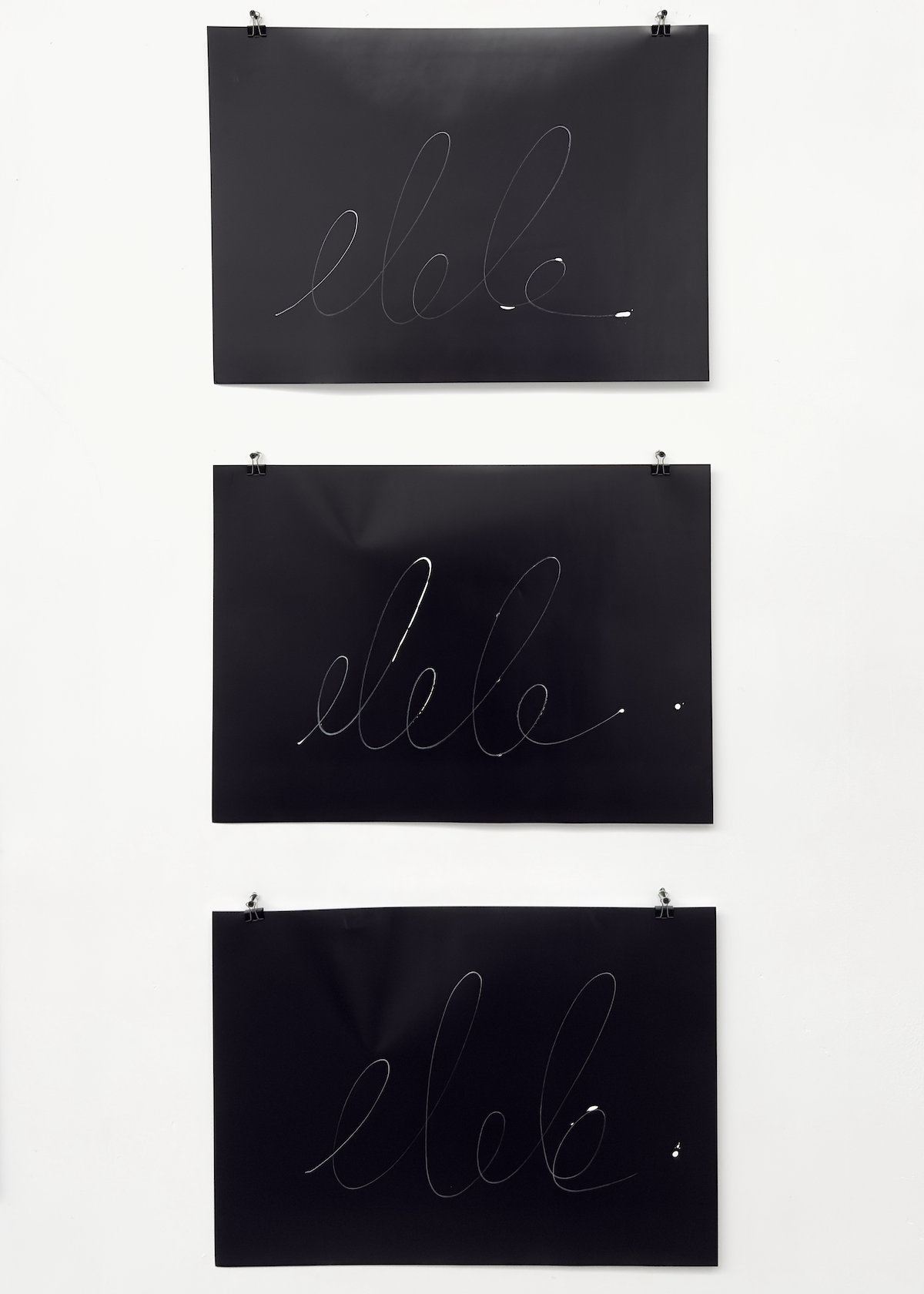
Veronika Wenger 2026
50 x 70 cm, marker on paper
Songshan Lake Boxes Art Museum, Dongguan
Photo: Boxes Art Museum
Every ligature repeats and distinguishes itself at the same time. Line is world operation, the concatenation of the visible and the invisible.
Veronika Wenger
Penna San Giovanni, November 2026
- References
Foucault, Michel. The Order of Things: An Archaeology of the Human Sciences. London: Tavistock, 1970.First published as Les mots et les choses: Une archéologie des sciences humaines. Paris: Gallimard, 1966.
Gardiner, Alan H. “The Egyptian Origin of the Semitic Alphabet.” Journal of Egyptian Archaeology 3 (1916): 1–16.
Goldwasser, Orly. “From the Iconic to the Linear: The Egyptian Scribes of Lachish and the Modification of the Early Alphabet in the Late Bronze Age.” In Alphabets, Texts and Artifacts in the Ancient Near East:Studies Presented to Benjamin Sass, edited by Israel Finkelstein, Christian Robin, and Thomas Römer, 118–160. Paris: Van Dieren, 2016.Höflmayer, Felix, et al. “Early Alphabetic Writing in the Ancient Near East: The ‘Missing Link’ from Tel Lachish.” Antiquity 95, no. 381 (2021): 705–719.
Kemp, Wolfgang. “Disegno: Beiträge zur Geschichte des Begriffs zwischen 1547 und 1607.” Marburger Jahrbuch für Kunstwissenschaft 19 (1974): 219–240.
Luhmann, Niklas. Art as a Social System. Translated by Eva M. Knodt. Stanford: Stanford University Press, 2000. First published as Die Kunst der Gesellschaft. Frankfurt am Main: Suhrkamp, 1995.
Lypp, Bernhard. Die Erschütterung des Alltäglichen: Kunstphilosophische Studien. Munich: Hanser, 1991.
Lypp, Bernhard. “Lineaturen.” In Veronika Wenger: Die Linie / The Line. Wolnzach: Kastner, 2020.
Petrie, W. M. Flinders. Researches in Sinai. London: John Murray, 1906.
Sass, Benjamin. The Genesis of the Alphabet and Its Development in the Second Millennium B.C. Ägypten und Altes Testament 13. Wiesbaden: Harrassowitz, 1988.
Sass, Benjamin. “The Genesis of the Alphabet and Its Development in the Second Millennium B.C.—Twenty Years Later.” De Kêmi à Birit Nâri 2 (2004/2005): 147–166.
Spencer-Brown, George. Laws of Form. London: George Allen and Unwin, 1969.
Darnell, John Coleman, F. W. Dobbs-Allsopp, Marilyn J. Lundberg, P. Kyle McCarter, and Bruce
Zuckerman. “Two Early Alphabetic Inscriptions from the Wadi el-Hôl.” Annual of the American
Schools of Oriental Research 59 (2005): 63–124.
Eisenstein, Elizabeth L. The Printing Press as an Agent of Change: Communications and Cultural
Transformations in Early-Modern Europe. Cambridge: Cambridge University Press, 1979.
Febvre, Lucien, and Henri-Jean Martin. The Coming of the Book: The Impact of Printing 1450–1800.
Translated by David Gerard. London: Verso, 1976.
Tsien, Tsuen-hsuin. Paper and Printing. In Science and Civilisation in China, vol. 5, part 1, edited by Joseph Needham. Cambridge: Cambridge University Press, 1985.
Image Credits
Slide 6: Exhibition poster, Manufacturing Aesthetics 2026, Songshan Lake Boxes Art Museum, Dongguan. Graphic design: Liu Yunlai. Courtesy of Songshan Lake Boxes Art Museum.
Slide 15: Ceramic “frying pan” with incised oared ship among spirals. Chalandriani, Syros, Early Cycladic II, c. 2800–2300 BCE. National Archaeological Museum, Athens, inv. 4974. Image: National Archaeological Museum, Athens.
Slide 23: Proto-Sinaitic inscription, Sinai 346, Serabit el-Khadim, Sinai, Middle–Late Bronze Age. Egyptian
Museum, Cairo, JE 38268. Photograph by W. M. Flinders Petrie, 1906. Public domain, via Wikimedia Commons.
Slides 24–26: Table compiled by the author after Gardiner (1916), Sass (1988; 2004/2005), Goldwasser (2016), and Darnell et al. (2005).