International Studio Course of
Experimental Painting Department
Hubei Institute of Fine Arts, Wuhan
Veronika Wenger
DISEGNO – THE DRAWING AND THE LINE
A three-part course exploring the line as operation, medium, and world principle
International Studio Course of Experimental Painting Department
Hubei Institute of Fine Arts, Wuhan
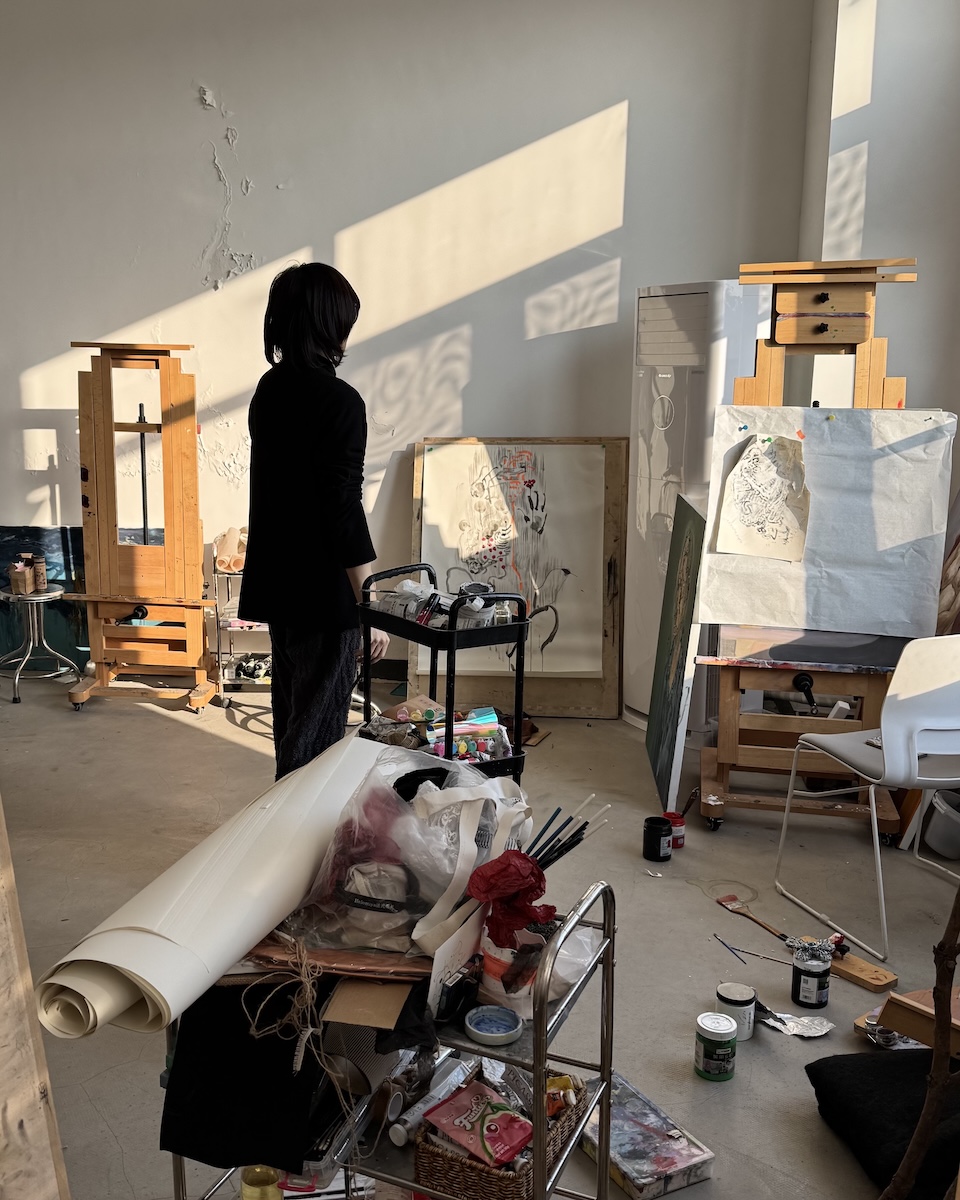
This course investigates the line not as representation, but as a fundamental operation that connects us to the world. Through three interconnected modules, we explore how the line functions as material, as ordering principle, and as communication – before it becomes drawing, decoration, or language.
International Studio Course of
Experimental Painting Department
Hubei Institute of Fine Arts, Wuhan
Module I:
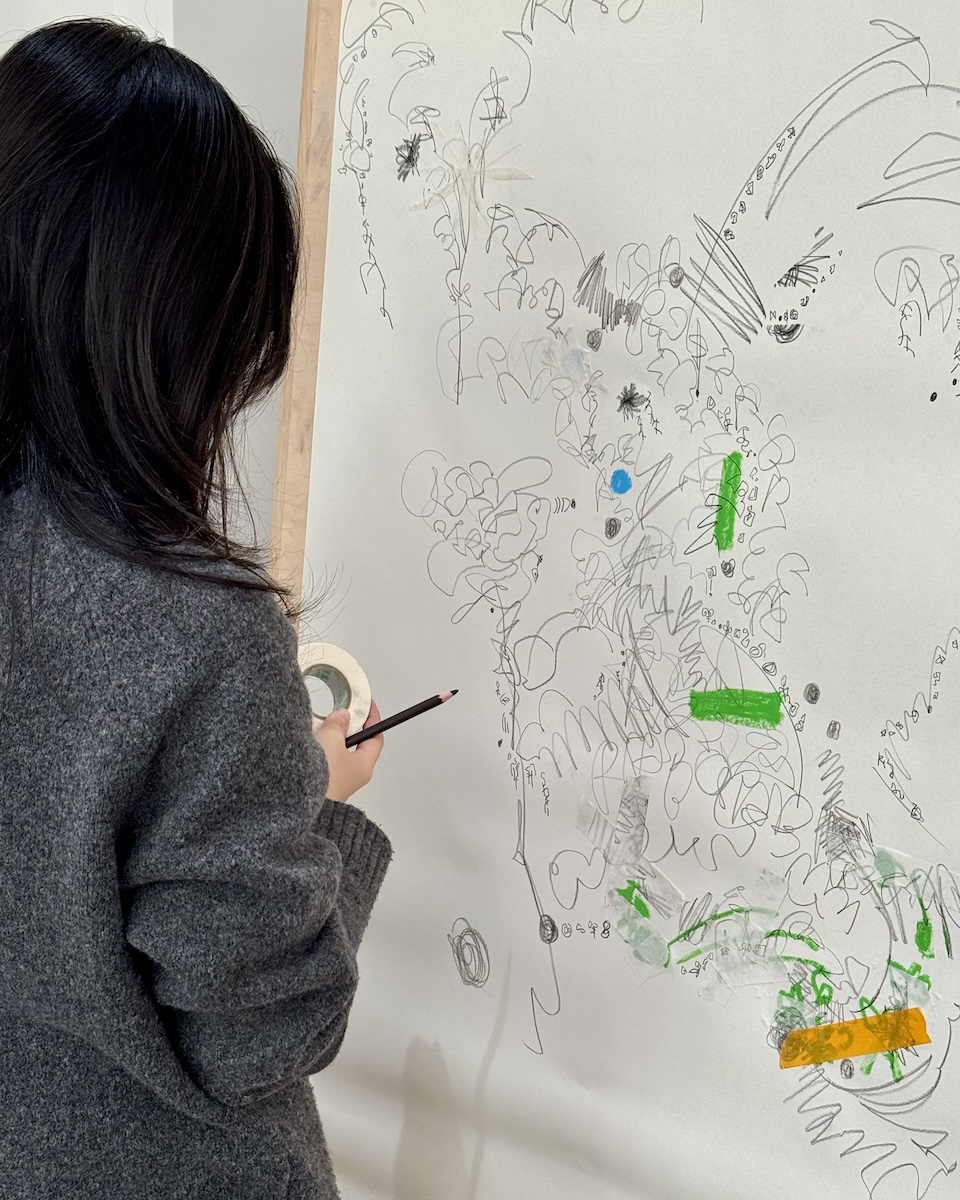
Line as Drawing – Line as Material
What is the line before it becomes representation?
How does the line function as both operation and medium/form?
The line is not an abstraction of something – it is a concrete operation.
Graphite on paper, ink on silk, pixels on screen: material trace, physical presence, operative distinction.
This module explores the paradox that the line is both abstract and non-abstract simultaneously.
International Studio Course of
Experimental Painting Department
Hubei Institute of Fine Arts, Wuhan
Theoretical Anchor Points:
1. Spencer-Brown: Draw a distinction – the primordial act
2. Luhmann: Form and communication
3. Three modes of observation (based on Veronika Wenger’s research):
- Direct observation of nature
- From memory
- With knowledge
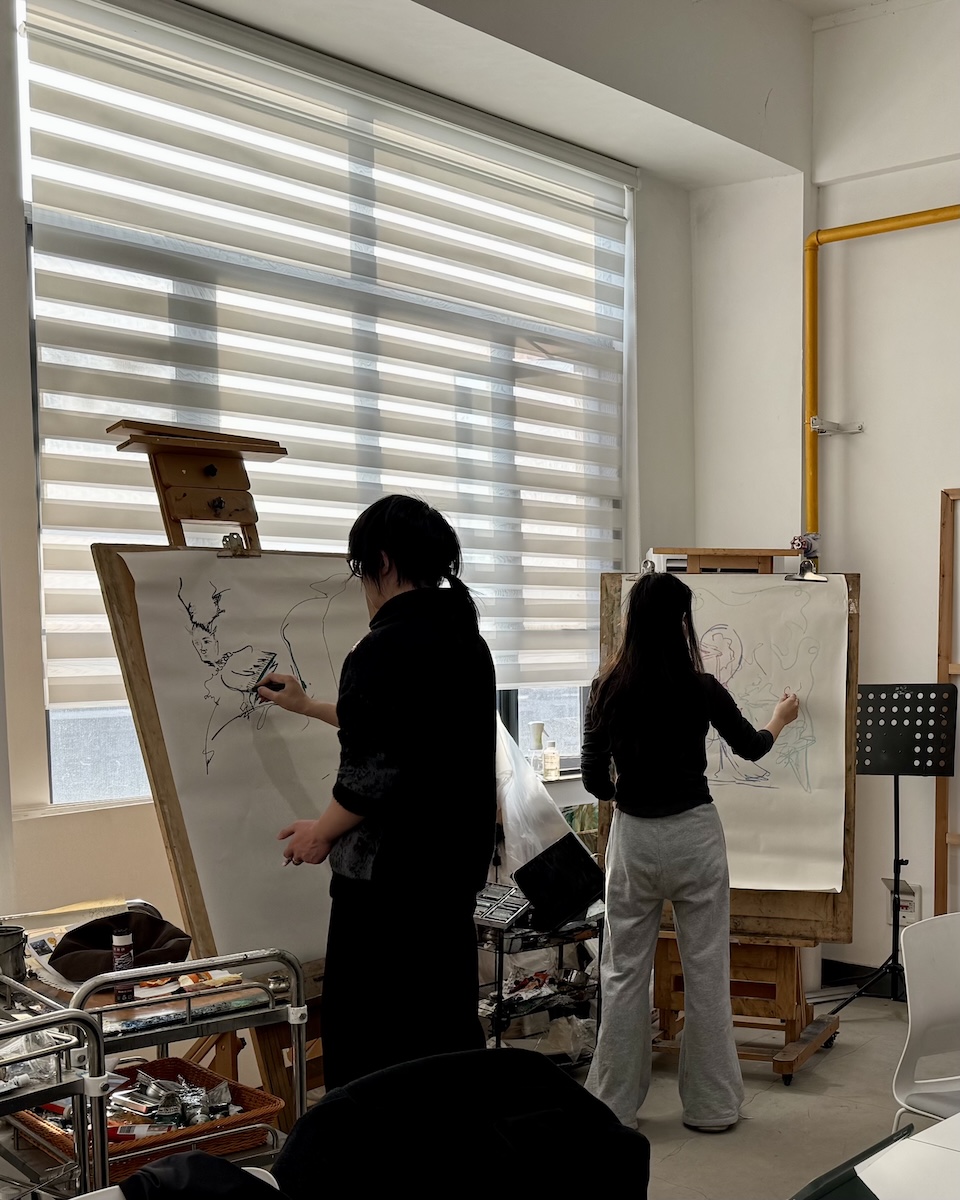
Exercise with horizontal/vertical as primary distinction – exploring marked/unmarked space without representation.
International Studio Course of
Experimental Painting Department
Hubei Institute of Fine Arts, Wuhan
Module II:
Line as Ornament – Line as Pattern
The line, as such, on a surface is not an abstraction – it is a line.
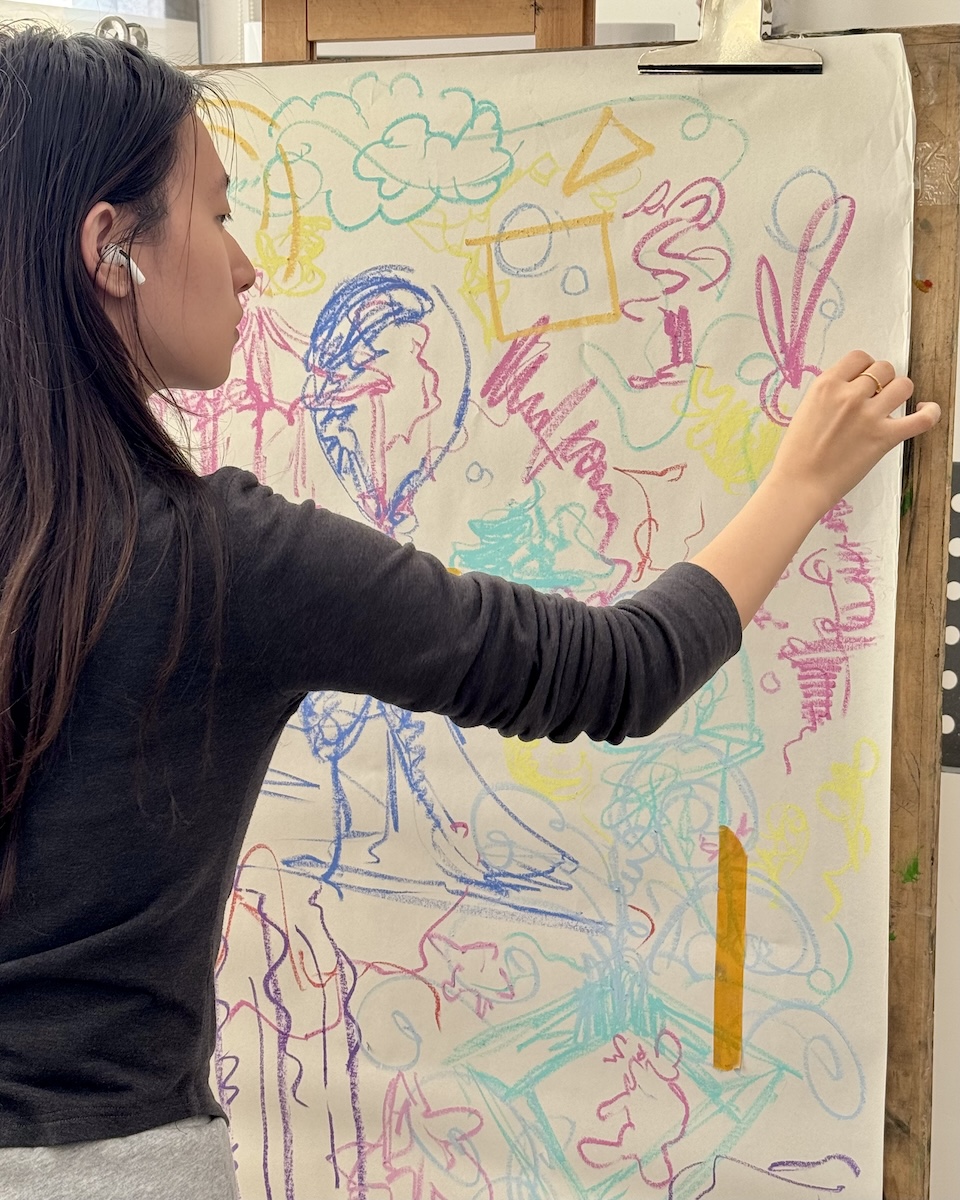
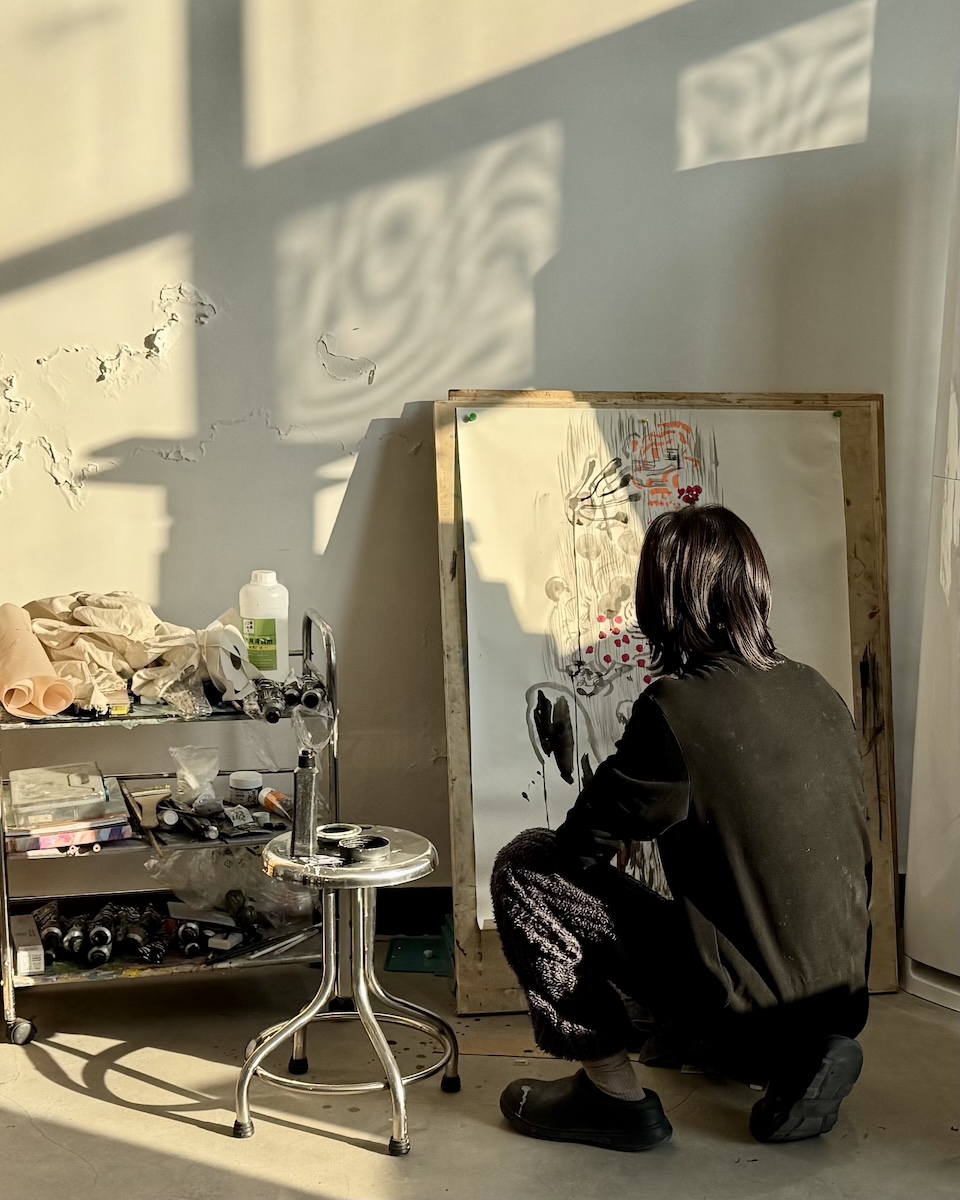
This seemingly simple statement contains a fundamental insight: the line is not abstraction from something. It is concrete operation. Ornament is not decoration, but a world principle – repetition with variation, endless concatenation. Before narration, before symbolism: Byzantine vessels with waves, spirals, branches reveal a universal principle that precedes cultural differentiation.
International Studio Course of
Experimental Painting Department
Hubei Institute of Fine Arts, Wuhan
Distinktion Ornament/Pattern:
| Ornament | Pattern |
|---|---|
| Living, dynamic | Often mechanically repeated |
| Always specific | Never purely abstract |
| Organic | Dictated |
| Part of world principle | Copied |
Theoretical Anchor Points:
1. Niklas Luhmann: “The ornamental line is part of nature”
2. Leonardo da Vinci: “The divine nature […] that repeats all visible works”
3. Bernhard Lypp: “Murmurings of the world”
International Studio Course of
Experimental Painting Department
Hubei Institute of Fine Arts, Wuhan
Module III:
Line as Rhythm – Line as Communication
Drawing is a communicative operation, not representation.
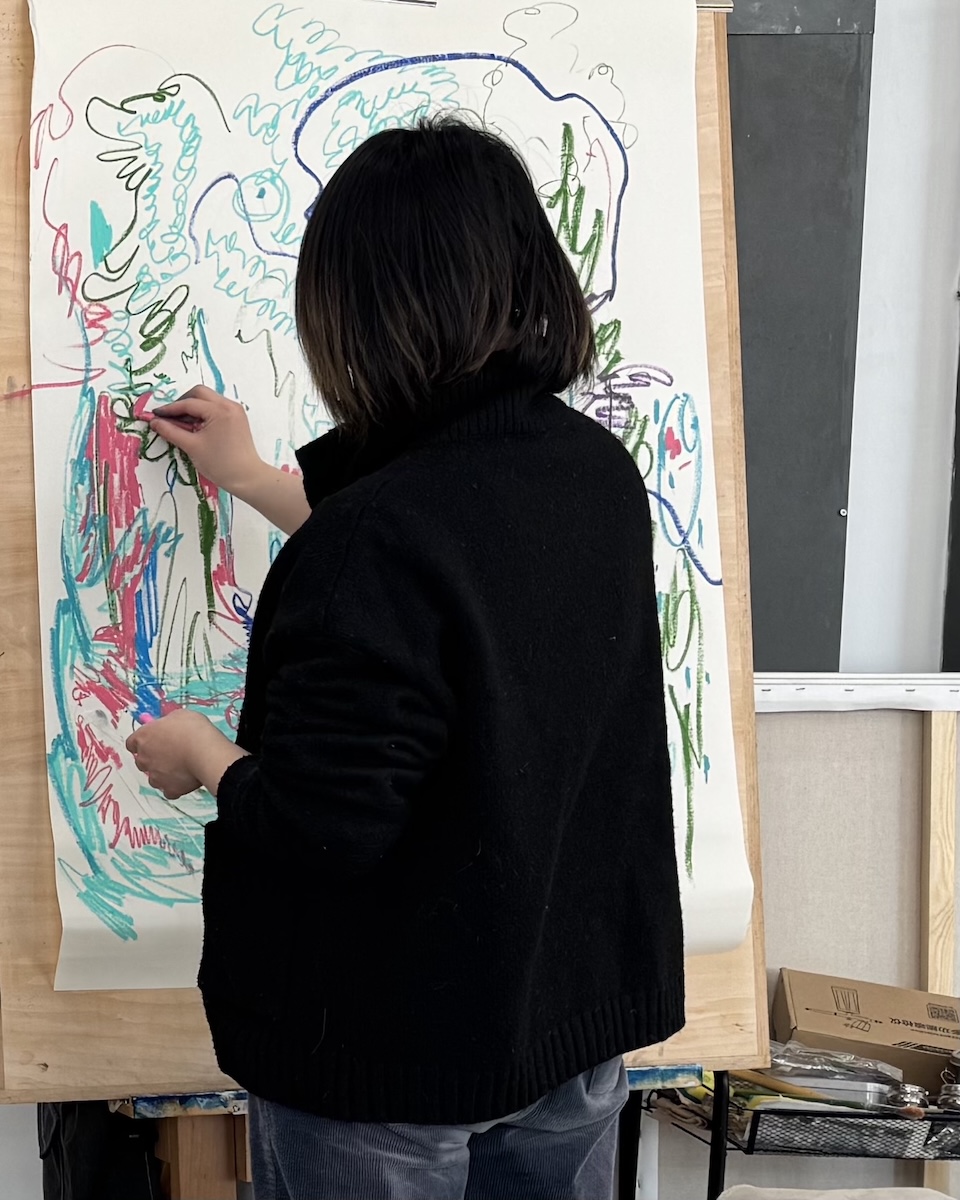
When you draw a line, what are you doing? You might say: ‘I am making a mark. Creating form. Expressing something.’ But consider this: you are communicating. Not in the sense of ‘sending a message’ (though that can happen). Something more fundamental: a relationship. Between your hand, the paper, the space, yourself – and whoever will come next. This is not a thing. It is an event. And every event is temporal.
International Studio Course of
Experimental Painting Department
Hubei Institute of Fine Arts, Wuhan
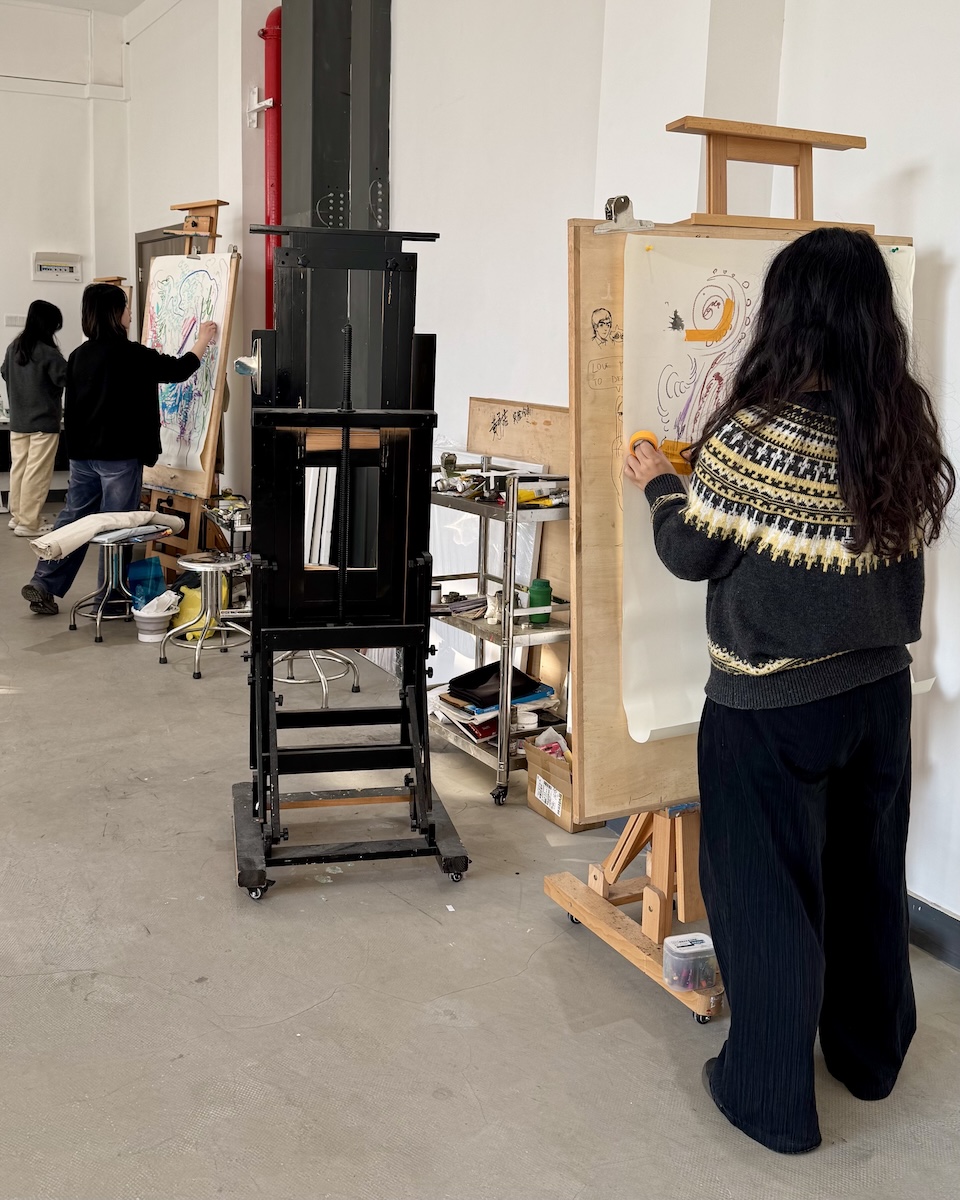
Rhythm is not mere repetition – it is repetition WITH difference. Like a heartbeat: regular, but responsive to the body. Variable, alive: step by step, each unique. The line carries the rhythm of the body within it – slow vs. fast, hesitant vs. confident. Hand, arm, posture determine the stroke.
International Studio Course of
Experimental Painting Department
Hubei Institute of Fine Arts, Wuhan
Chinese calligraphy has long understood this: Qi (energy), the stroke as world energy, participation of the entire body.
Western approaches are often more cognitive-mechanical.
International Studio Course of
Experimental Painting Department
Hubei Institute of Fine Arts, Wuhan
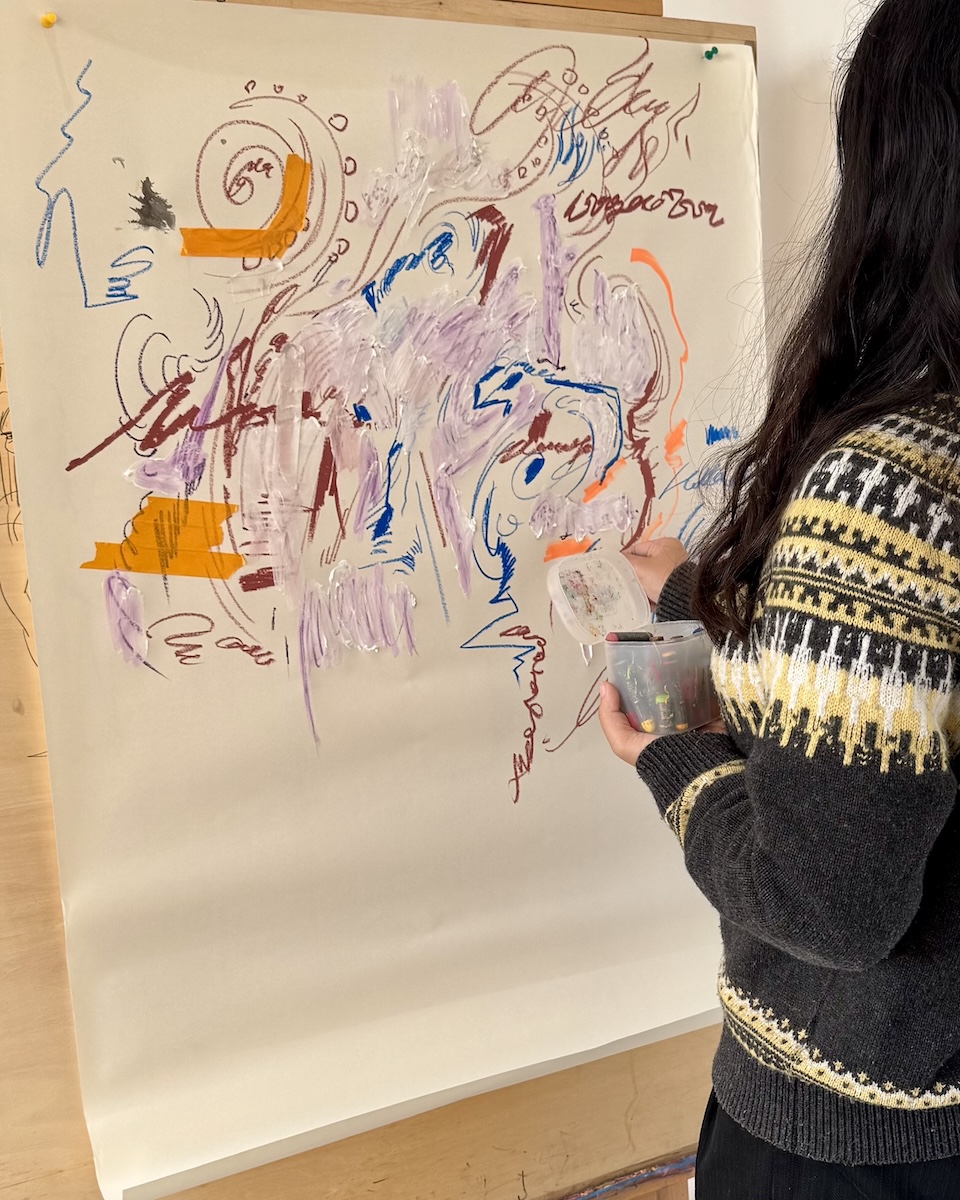
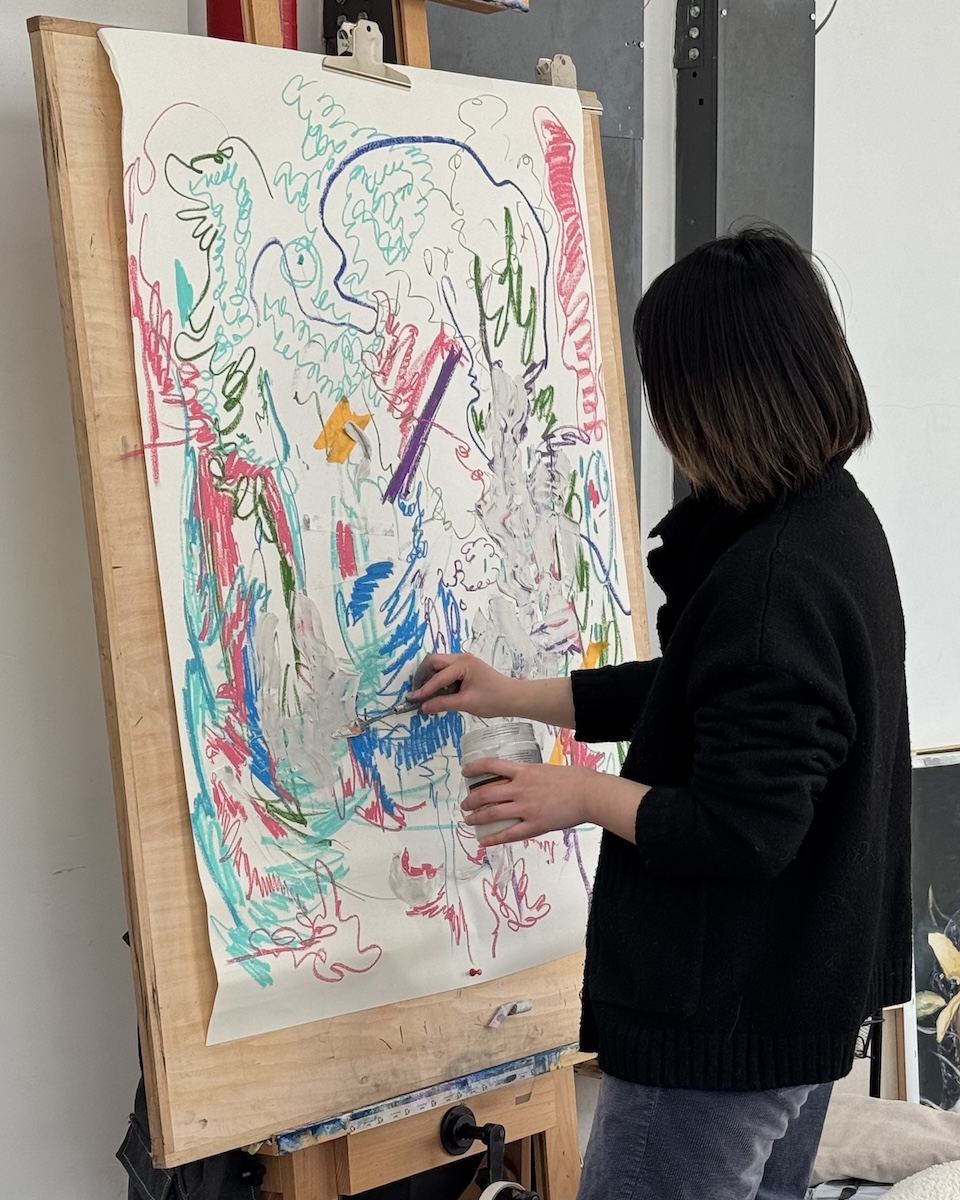
Drawing is a communicative operation, not representation.
Multiple patterns (not rigid grids) enable structure that can unfold.
International Studio Course of
Experimental Painting Department
Hubei Institute of Fine Arts, Wuhan
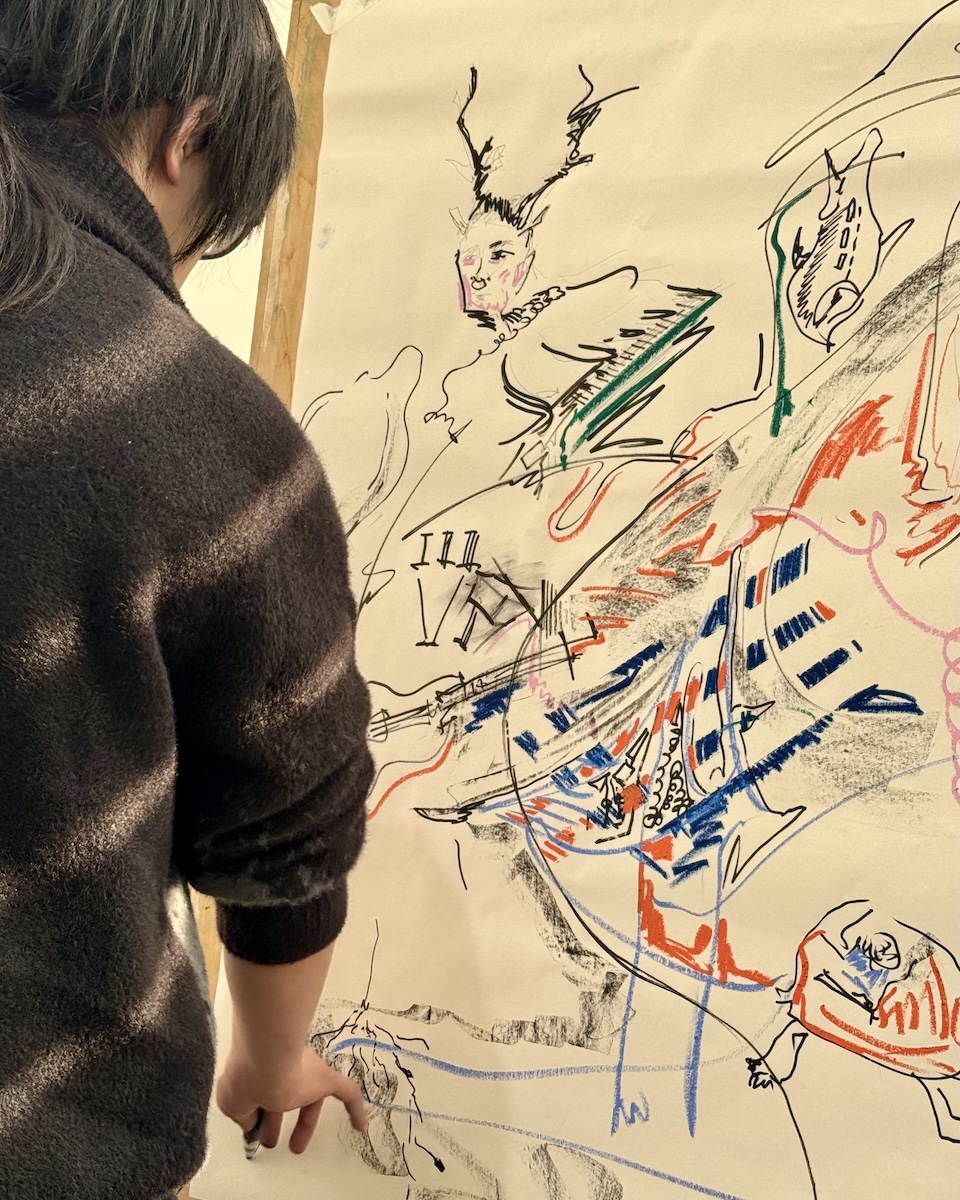
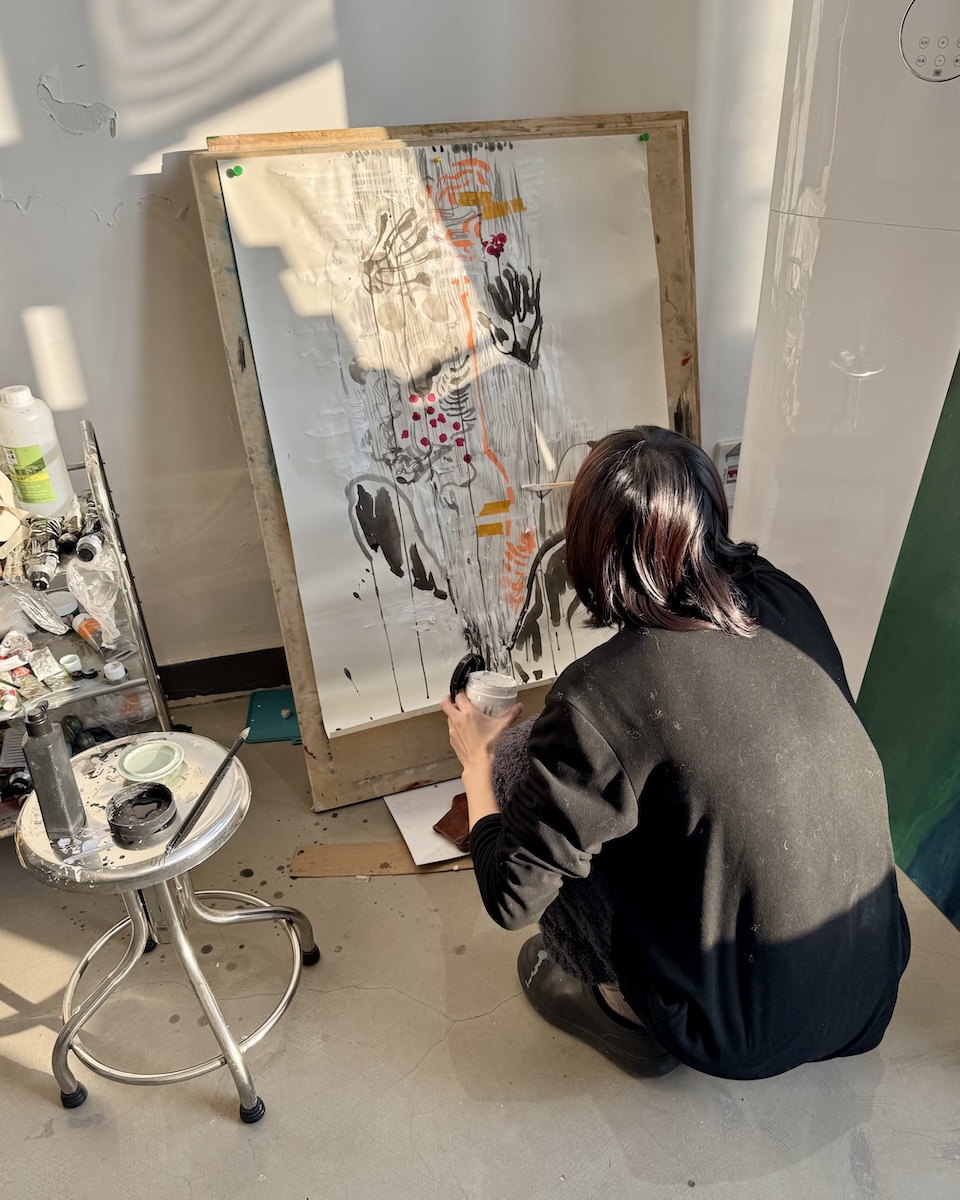
These three modules are interconnected: the material line becomes ornamental through repetition, and communicates through rhythm. Each module can stand alone, yet they form a coherent exploration of what drawing is before it becomes image, symbol, or language.
International Studio Course of
Experimental Painting Department
Hubei Institute of Fine Arts, Wuhan
Theoretical Anchor Points:
1. Michel Foucault: The transition from trinitarian to binary observation
2. Niklas Luhmann: Form, medium, and communication
3. George Spencer-Brown: “Draw a distinction”
4. Bernhard Lypp: “Connecting of distinctions”
International Studio Course of
Experimental Painting Department
Hubei Institute of Fine Arts, Wuhan